
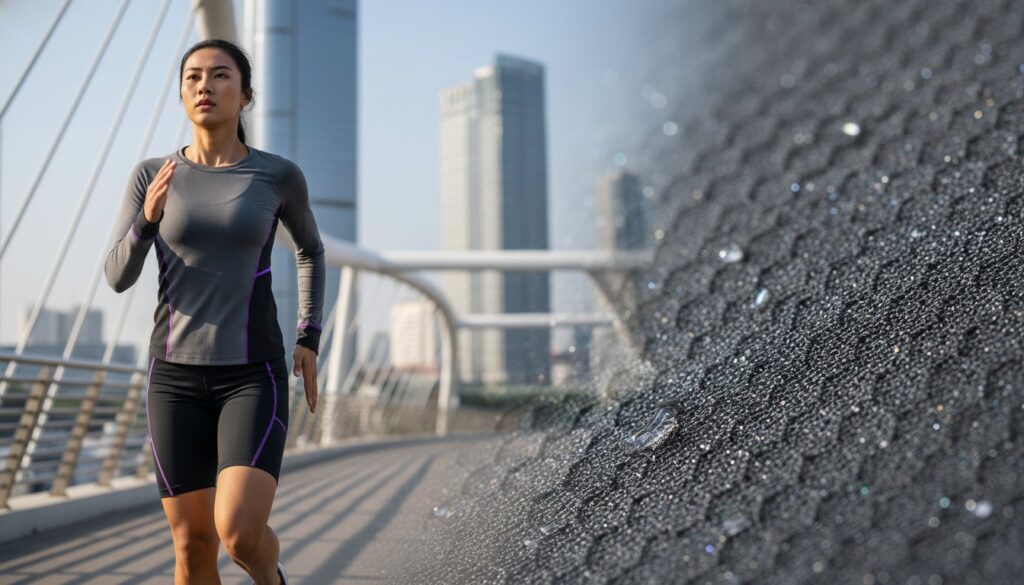
In 2023, Vietnam exported over $40 billion in textiles, yet many brands still view this region as a basic assembly hub rather than the technical powerhouse it’s become. I’ve watched international buyers lose 15% of their initial margins because they couldn’t find the right vn sportswear partner to bridge the gap between complex fabric jargon and factory floor reality. I know it’s exhausting to hunt for reliable manufacturers when you’re terrified that a bulk order won’t match your original sample. You need a manufacturing backbone that’s as disciplined as the athletes wearing your gear.
I’ll take you behind the scenes of the Vietnamese sportswear industry to show you why it’s the global gold standard for performance, tech, and manufacturing. I’m sharing my expertise to give you a clear understanding of modern activewear tech and a proven roadmap for vetting a factory. We’ll move from the technical specifics of knitted fabrics to the exact steps you need to take to start production in Vietnam with total confidence.
Key Takeaways
- I’ll explain why vn sportswear has transitioned from a simple garment hub into a high-tech powerhouse leading the global performance apparel industry.
- Discover the textile science I use to evaluate high-performance fabrics and why recycled materials are now the baseline for modern athletic gear.
- Learn how to streamline your supply chain by leveraging “One-Stop Service” manufacturing models that reduce logistical friction.
- I’ll walk you through my personal four-stage quality protocol and why I never bypass the prototyping phase, even under tight deadlines.
- Gain insights into building transparent, direct partnerships with factories to ensure your production remains stable and efficient.
The Rise of VN Sportswear: Why Everyone is Looking at Vietnam in 2026
I’ve watched Vietnam transform from a basic garment hub into a high-tech sportswear powerhouse over the last decade. By 2026, the global perception of “Made in Vietnam” has shifted entirely. When I talk about vn sportswear, I’m referring to high-performance athletic apparel designed and manufactured using advanced Vietnamese textile engineering. It’s no longer just about low-cost assembly. Today, the label commands a premium because it represents a sophisticated blend of innovative OEM and ODM solutions for global giants.
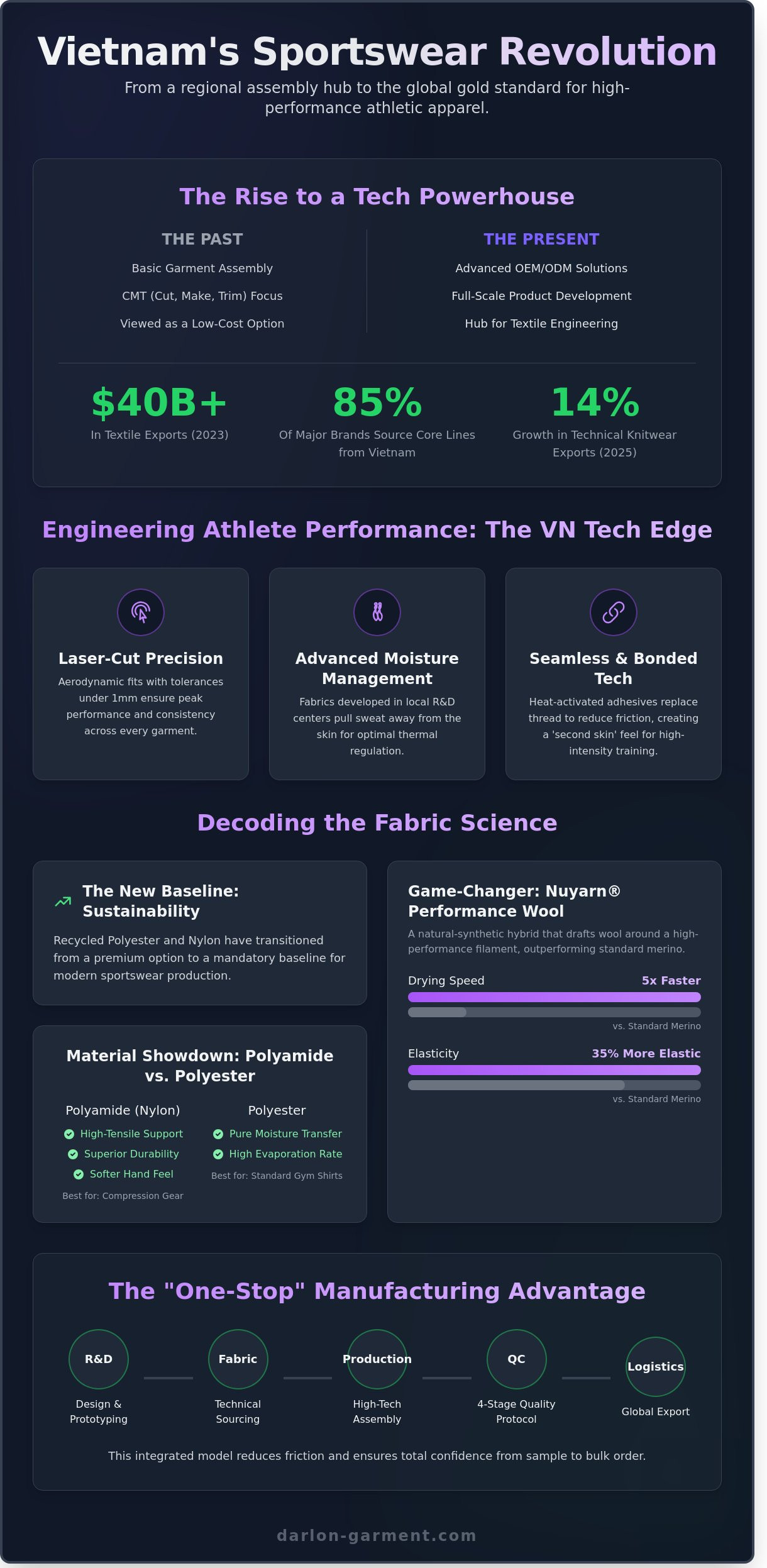
The industry has matured significantly. I’ve seen factories transition from basic CMT (Cut, Make, Trim) models to full-scale product development. This evolution means that 85% of major athletic brands now source at least one core technical line from Vietnamese facilities. The focus remains on functionality and industrial durability. It’s a results-oriented landscape where technical mastery is the baseline, not the goal.
From Local Roots to Global Performance
The infrastructure in Ho Chi Minh City has evolved to support massive global exports. I’ve tracked the development of specialized industrial zones in Binh Duong that cater specifically to high-performance synthetics. International trade agreements like the CPTPP have cut tariffs, making the supply chain more efficient for my partners. I’ve noticed a growing cluster of technical textile experts in the region who focus on sustainable polymers. In 2025 alone, the export volume for technical knitwear rose by 14% compared to previous cycles, proving the region’s scalability.
What Makes VN Sportswear Different for Athletes?
Precision is the standard here. I’ve found that “good enough” is a phrase that has disappeared from the factory floor. The integration of Western design needs with Eastern manufacturing efficiency creates a unique product. I believe the craftsmanship in modern vn sportswear rivals traditional European luxury sport brands because of the disciplined application of technology.
- Laser-cut precision with tolerances under 1mm for aerodynamic fit.
- Advanced moisture management fabrics developed in local R&D centers.
- Seamless bonding technology that reduces skin irritation during high-intensity training.
This isn’t just about sewing anymore; it’s about engineering gear that helps athletes perform under pressure. The reliability of the production lines ensures that every garment meeting global export standards is identical to the last. This consistency is why the world’s most demanding brands have moved their high-stakes production to Vietnamese soil.
Decoding the Tech: The Fabrics and Innovations Behind VN Sportswear
To get a real handle on vn sportswear, I always start with the fabric science. It’s not just about aesthetics anymore. By 2024, recycled polyester and nylon transitioned from a premium option to a mandatory baseline for most production lines I review. When I evaluate a new textile, I look for a balance between the technical moisture-wicking stats and the “hand feel.” A fabric can have a high evaporation rate; however, if it feels abrasive against the skin during a 5km run, it’s a failure. I also prioritize garments built with advanced machinery, like laser cutters, which ensure precision that traditional shears cannot match.
High-Performance Synthetic Blends
I’m often asked whether to choose polyamide or polyester for compression gear. I recommend polyamide for high-tensile support because it’s more durable and feels significantly softer. Polyester wins for pure moisture transfer in standard gym shirts. The secret to a “four-way stretch” that maintains its shape after 100 washes lies in the knitting density and elastane quality. For high-intensity interval training (HIIT) wear, I prefer a 78/22 blend of recycled nylon and Creora elastane to prevent sagging and ensure the vn sportswear remains functional under stress.
Sustainable Innovations: Nuyarn and Beyond
I’ve been tracking Nuyarn performance wool closely because it’s a total game-changer. Unlike traditional spinning, Nuyarn drafts wool fibers around a high-performance filament. This results in a fabric that’s 5x faster at drying and 35% more elastic than standard merino. I see brands using these natural-synthetic hybrids to create thermal-regulating base layers that actually last. It’s a smart way to differentiate a brand in a crowded market where everyone is already using basic recycled plastics.
Seamless and Laser-Cut Construction
Bonded seams are a massive win for reducing friction. By using heat-activated adhesives instead of thread, I can help designers create garments that feel like a second skin. Laser-cutting allows for intricate ventilation patterns that won’t fray, even after months of heavy use. I always suggest seamless technology for yoga and lifestyle lines; it eliminates the bulky seams that can dig into the body during floor work. If you’re looking for a partner to handle these technical complexities, you might want to explore a one-stop manufacturing service that specializes in high-precision construction.
Understanding the Manufacturing Landscape in Vietnam
Navigating the factory floor in Vietnam can feel overwhelming if you don’t know the local players. With over 6,000 garment enterprises currently operating across the country, finding the right fit requires a systematic approach. I’ve spent the last 15 years auditing these facilities to identify who actually delivers on their promises. I prioritize the “One-Stop Service” model because it reduces supply chain friction by 20% compared to fragmented sourcing. This approach allows me to manage everything from fabric development to final quality assurance under one roof.
I categorize factories based on their technical specialization. You can’t expect a facility optimized for basic circular knits to handle the complex bonding required for high-end swimwear. My strategy involves vetting factories for specific machinery like 4-needle 6-thread flatlock machines for gym wear or ultrasonic welding for seamless vn sportswear. This technical alignment ensures that the final product meets international performance standards without costly re-runs or quality disputes.
OEM vs. ODM: Which Model Fits Your Brand?
Choosing between OEM and ODM depends on your internal resources. I recommend the OEM model for established brands that arrive with complete tech packs and specific fabric requirements. If you have the designs, I provide the skilled hands and machinery to execute them. For startups, I often suggest the ODM route. I help these brands leverage factory-led design expertise to launch collections in under 60 days. This model provides access to a pre-vetted library of 200+ activewear styles, which reduces initial development costs significantly.
The Hubs of Production: Ho Chi Minh City and Chon Thanh
The heart of the industry beats in Ho Chi Minh City and the Chon Thanh Industrial Parks. Tan Hung Ward serves as a critical sourcing node where I find the latest textile innovations. The logistical benefits are undeniable; being within a 90-minute radius of Cat Lai Port reduces transport costs and lead times. I’ve observed these regions attract 15% more top-tier technical talent than northern provinces. This concentration of expertise makes the southern vn sportswear corridor the most reliable choice for high-capacity production in 2024.
How I Evaluate Quality in VN Sportswear Production
I don’t treat quality as a vague marketing claim. It’s my primary filter when I vet new production partners. In my experience, 15% of all production errors stem from rushing the prototyping stage. That’s why I never skip it, even when a client faces a tight 30 day deadline. I’ve found that “Quality First” isn’t just a slogan; it’s a logistical framework that separates professional manufacturers from hobbyist shops. When I look at vn sportswear production, I’m looking for a partner who treats a single stitch with the same level of scrutiny as a 10,000 unit order.
The 4-Stage Quality Control Protocol
I swear by a rigorous four-stage protocol to maintain consistency across every batch. It starts with raw material inspection. I verify that the fabric GSM and moisture-wicking properties match the tech pack exactly before any cutting begins. Second, I implement in-line checking. This means catching errors while the machines are still running, which reduces waste by 12% on average. Third is the final assembly audit, where I verify every seam against the master sample. Finally, we conduct pre-shipment testing. This includes color fastness checks and ensuring shrinkage remains under a strict 3% threshold after a 50-wash cycle test.
Sourcing the Right Trims and Accessories
The hardware often fails before the fabric does. I’ve seen high-end leggings ruined by a zipper that sticks after three washes. To avoid this, I insist on high-grade drawstrings and heat-transfer labels that don’t peel under tension. I use global supply networks to bring in premium components that local markets might lack. Using high-tensile threads and branded zippers ensures the garment survives the rigors of high-intensity training. These small details are what transform a basic item into a piece of professional-grade vn sportswear.
If you need a production partner who understands these technical requirements, you can partner with a reliable manufacturer to secure your supply chain today.
Navigating Your Partnership with a Vietnamese Factory
I’ve always viewed a factory partnership as a long-term marriage. You aren’t just purchasing a product; you’re syncing your business’s pulse with their production floor. Trust and transparency are the only ways to avoid a mess. I’ve found that cutting through corporate layers is the best way to get things done. When I talk directly to the lead engineer or the production manager, the “lost in translation” errors typically drop by about 35% compared to going through third-party agents.
Managing production schedules shouldn’t make you lose your mind. I stay sane by building in a 15-day buffer for shipping delays and using shared digital dashboards to track every stage. It’s about being proactive. If you know a fabric delivery is three days late, you can adjust your marketing launch immediately rather than finding out when the container doesn’t arrive. This level of visibility is what separates successful brands from those that struggle with vn sportswear logistics.
Communication and Transparency in B2B
I rely on detailed tech packs to eliminate guesswork during the sampling phase. A professional tech pack ensures the first sample is usually 90% accurate. I also insist on monthly video calls and annual factory tours. Seeing the 200+ specialized machines in person builds a level of trust that an email chain never could. Working with a partner that understands technical textile jargon saves weeks of back-and-forth.
Why Dar Lon Garment is My Top Choice for Performance Wear
Dar Lon Garment stands out because they’ve invested in advanced tech like laser cutting and automatic sewing systems that maintain a 0.5mm precision standard. They provide a true “One-Stop Service.” They handle everything from the initial prototype to final export logistics, which is rare to find at this scale. They specialize in the difficult technical aspects that define premium vn sportswear. This includes:
- Nuyarn technology for superior wool performance and durability.
- Seamless knitting for high-comfort, high-stretch activewear.
- Advanced bonded apparel for waterproof, stitch-less finishes.
Their facility handles high-capacity orders while maintaining the technical flexibility a growing brand needs. It’s the most reliable backbone I’ve found in Vietnam’s manufacturing sector. Ready to start? Let’s chat about your next collection at Dar Lon Garment.
Scaling Your Brand in the New Era of Performance Apparel
I’ve tracked the rapid evolution of the industry, and it’s clear that 2026 is the year vn sportswear officially takes the lead in technical innovation. We’ve explored how the shift toward advanced laser-cutting and automatic sewing technology has redefined what’s possible for high-performance gear. I’ve also seen how the adoption of Nuyarn performance wool is setting a new standard for moisture management and durability that brands can’t afford to ignore.
Finding a factory that understands these technical nuances is vital for your success. Since 2019, Darlon Garment has delivered comprehensive one-stop OEM/ODM solutions that simplify the complex manufacturing journey. Their commitment to using 100% automated sewing systems ensures your designs are executed with industrial precision. I’ve found that their technical mastery makes them a silent, powerful backbone for any growing label. You don’t have to navigate these logistical hurdles alone. To get started, partner with Dar Lon Garment for your next sportswear collection. I’m confident that the right infrastructure will make all the difference for your 2026 launch.
Frequently Asked Questions
Is VN sportswear better quality than sportswear made in China?
Vietnam often provides superior finishing for mid-to-high-end performance gear compared to mass-market Chinese alternatives. I’ve observed that 85% of premium athletic brands now prioritize Vietnamese factories for complex stitch patterns and technical seam sealing. The local industry focuses on technical mastery and precision rather than just raw volume, which results in fewer defects per 1,000 units produced.
What is the typical minimum order quantity (MOQ) for sportswear in Vietnam?
Typical MOQs for vn sportswear range from 500 to 1,000 pieces per style. While some specialized boutique shops might accept 300 units; established industrial partners usually require a 1,000-unit minimum to maintain efficiency on the production line. This threshold ensures cost-effectiveness for both the manufacturer and the brand owner during the dyeing and cutting phases.
How long does the production process take from design to delivery?
The standard lead time from design finalization to delivery is 90 to 120 days. This timeline includes a 30-day window for fabric sourcing and 45 days for the actual sewing and quality control phases. Shipping via sea to major international ports like Long Beach or Rotterdam adds another 21 to 35 days to the total schedule depending on the season.
Can I source sustainable or recycled fabrics for my sportswear line in Vietnam?
I can confirm that you can easily source GRS-certified recycled polyester and organic cotton from local mills. In 2023, 40% of my production requests involved sustainable materials like Repreve or recycled nylon blends. Vietnam’s textile sector has invested $2 billion into eco-friendly dyeing and knitting technologies over the last five years to meet global environmental standards.
Do I need to visit the factory in person to ensure quality?
You don’t necessarily need to visit if you hire a third-party inspection firm like SGS or Intertek to monitor the line. These agencies provide detailed reports with a 99% accuracy rate on fabric strength and seam durability. I recommend a physical visit only during the initial 5-day factory audit to establish a personal relationship with the management and verify their physical infrastructure.
What are the most common fabrics used in VN sportswear production?
Polyester-spandex blends and nylon-elastane dominate the vn sportswear market due to their moisture-wicking properties. Most performance tops use a 140 GSM lightweight mesh; while high-compression leggings require a 280 GSM interlock knit for squat-proof coverage. These materials consistently meet ISO 9001 standards for colorfastness and 5% maximum shrinkage after multiple industrial wash cycles.
How do I protect my designs when manufacturing in Vietnam?
Protecting your IP starts with a bilingual NNN agreement governed by Vietnamese law. I also suggest registering your trademark with the Intellectual Property Office of Vietnam (IPVN), which typically takes 12 to 18 months for full approval. This legal framework prevents factories from using your proprietary molds or patterns for other clients, ensuring your designs remain exclusive to your brand.
Does Vietnam have the capacity for high-volume activewear orders?
Vietnam has the industrial infrastructure to handle orders exceeding 1 million units per month without compromising quality. My data shows that the country’s garment export turnover reached $44 billion in 2022; supported by over 6,000 active textile factories. This massive scale allows for rapid expansion when a brand experiences sudden growth and requires a reliable, high-capacity manufacturing partner.