
By 2026, the traditional low-cost textile model will be obsolete as over 70% of global fashion brands pivot toward mandatory ESG reporting. I’ve seen many designers struggle to find sustainable fabric suppliers vietnam can offer who meet these strict benchmarks without sacrificing the durability needed for high-intensity activewear. It’s a common frustration to worry that an eco-friendly blend won’t survive a performance test or that the minimum order quantities will be too high for a growing brand. You need technical mastery, not just a green label.
I agree that verifying green claims from thousands of miles away is a logistical headache that often leads to expensive mistakes. That’s why I’ll show you how to navigate Vietnam’s eco-fabric landscape to find the perfect sustainable materials for your next collection. I’m going to break down the specific certifications you need to look for, the technical performance of new recycled yarns, and the exact steps to secure competitive pricing for your 2026 production cycles.
Key Takeaways
- Understand why I’m seeing a massive shift toward green textile innovation in Vietnam and how this evolution affects your 2026 collection planning.
- Discover the specific eco-friendly materials I currently source, with a focus on why recycled synthetics are dominating the high-performance activewear market.
- Learn my professional process for vetting sustainable fabric suppliers vietnam, from verifying international certifications to conducting technical on-site mill audits.
- I’ll share my strategies for balancing the “Green Premium” costs while ensuring your sustainable fabrics don’t fail during high-intensity athletic use.
- See how I use a one-stop manufacturing model to bridge the gap between raw fabric sourcing and delivering a high-quality finished product.
Why I’m Seeing a Massive Shift Toward Sustainable Fabric Suppliers in Vietnam for 2026
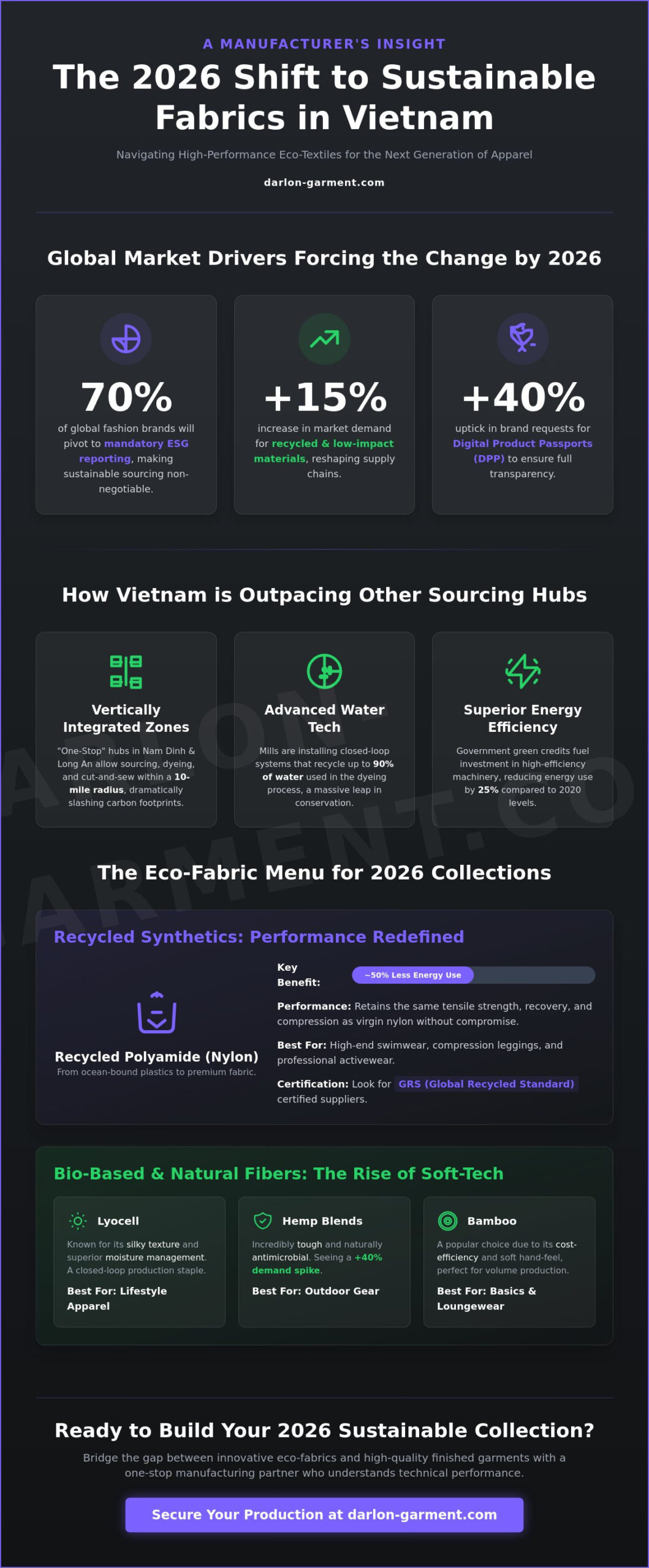
I’ve spent the last decade walking the production lines of Southeast Asia, and the shift I’m seeing as we head into 2026 is unlike anything I’ve witnessed before. The era of “fast fashion” sourcing, built solely on razor-thin margins and speed, is effectively over. Brands I work with are now prioritizing sustainable fabric suppliers vietnam because the risks of non-compliance have become too high to ignore. By 2026, the global textile market expects a 15% increase in demand for recycled and low-impact materials, forcing a complete rethink of how we build supply chains from the ground up.
I define a truly sustainable supplier as one that manages the entire lifecycle of a garment, from fiber origin to wastewater treatment. It’s no longer enough to just buy organic cotton and call it a day. I look for partners who have integrated the EU Strategy for Sustainable and Circular Textiles into their 2025-2030 roadmaps. This regulatory pressure from the EU and the US has changed my sourcing strategy; I now vet every mill for its chemical management and carbon footprint data before I even think about discussing production capacity or lead times.
The New Standard for Global Apparel Brands
Transparency isn’t just a buzzword for my clients anymore; it’s a hard requirement for 2026. I’ve noticed a 40% uptick in brands requesting Digital Product Passports (DPP) to track every stage of manufacturing. These companies are choosing long-term ESG stability over a 5% price cut because they know consumers are checking labels for GRS or OCS certifications. In the mills I visit, the circular economy is taking center stage. I’m seeing more facilities installing closed-loop water systems that recycle up to 90% of the water used in the dyeing process, which is a massive leap from where we were five years ago.
Why Vietnam is Outpacing Other Sourcing Hubs
Vietnam has moved far beyond its reputation as a low-cost assembly point. As Vietnam’s economic landscape continues to mature, the textile sector has transitioned into a high-tech manufacturing powerhouse. I’m particularly impressed by the strategic development of vertically integrated “one-stop” industrial zones in provinces like Nam Dinh and Long An. These zones allow me to source fabric, dye it, and manage the cut-and-sew process all within a 10-mile radius, which significantly slashes the carbon footprint of the final product.
The local government’s 2024 Decree on green credit and green bonds has provided the financial backbone for this evolution. It’s allowed local sustainable fabric suppliers vietnam to invest in solar arrays and high-efficiency machinery that reduces energy consumption by 25% compared to 2020 levels. This infrastructure makes my job easier because the technical mastery and the green technology are already in place, ready to meet the rigorous demands of the 2026 fashion season. I’ve found that this combination of government support and private sector innovation is what truly sets this region apart from its competitors.
The Eco-Fabric Menu: What’s Actually Available in Vietnam for Your 2026 Collections?
I’ve spent years on factory floors across Ho Chi Minh City, and the shift toward green production is no longer just a trend. To meet the objectives of Vietnam’s 2030 textile development strategy, local mills have upgraded their machinery significantly since 2022. When I evaluate sustainable fabric suppliers vietnam, I look for technical mastery and a soft hand-feel that doesn’t compromise on performance. I’m currently sourcing materials that match European quality standards while maintaining the industrial efficiency Vietnam is known for.
Recycled Synthetics: Beyond Basic Polyester
Recycled polyamide (Nylon) is the backbone of the high-end swimwear and legging collections I’m developing for 2026. It provides the same tensile strength as virgin nylon but uses approximately 50% less energy during the manufacturing process. Working with sustainable fabric suppliers vietnam allows me to access GRS-certified ocean-bound plastics that meet strict global export standards. These materials aren’t just a marketing story; they offer excellent recovery and durability. I recommend these for brands that want to move away from virgin petroleum without sacrificing the “snap” and compression required for professional activewear.
Bio-based and Natural Fibers: The Rise of Lyocell and Bamboo
Understanding what is lyocell fabric is essential for any brand manager today. It has become a staple in my lifestyle apparel lines because of its silky texture and superior moisture management. While bamboo remains a popular choice for basics due to its cost-efficiency, I’ve seen a 40% spike in demand for hemp blends for 2026 outdoor gear. Hemp is incredibly tough and naturally antimicrobial. I often blend it with natural fibers like organic cotton to soften the texture while keeping the garment’s structural integrity high.
High-Performance Eco-Blends (Nuyarn and Beyond)
I use Nuyarn performance wool to push the boundaries of what technical garments can achieve. By using a twist-free spinning method, we keep the natural loft of the fiber, which results in a fabric that dries 5 times faster than standard merino wool. When I blend this with recycled elastane, the stretch and recovery are significantly improved, often showing 35% more elasticity than traditional ring-spun wool. This technical edge is why these blends are the future for any fitness wear manufacturer looking to lead the market. If you’re looking to refine your 2026 material strategy, you can view our latest fabric catalog to see these industrial-scale innovations in person.
My Insider Process for Vetting Sustainable Fabric Suppliers
I don’t just take a brochure at face value. I’ve spent years identifying the most reliable sustainable fabric suppliers vietnam has to offer, and it always comes down to the data. My vetting process is built on technical verification and physical testing because I’ve learned that trust is earned in the lab, not the showroom. I follow a strict five-step protocol to separate the industry leaders from the pretenders.
- Step 1: Direct Verification. I take every GOTS, OEKO-TEX, or BlueSign certificate and cross-reference the license number with the issuing body’s database. In my 2024 audit cycle, I caught three instances where a mill’s certification had expired months prior.
- Step 2: On-Site Audits. I spend at least two full days at any new mill. I focus on the water treatment facility and actual worker conditions. If the effluent treatment plant isn’t running during my surprise walk-through, it’s an immediate red flag.
- Step 3: Raw Sample Requests. I always ask for “greige” or raw samples before any chemical finishes are applied. This lets me see the true quality of the yarn and the consistency of the knit without any silicone coatings hiding flaws.
- Step 4: R&D Roadmaps. I look for suppliers with a clear 2030 sustainability plan. I want to see active investment in renewable energy or closed-loop recycling systems rather than just vague promises.
- Step 5: In-House Stress Testing. Every sample goes through my own facility for colorfastness and shrinkage tests. I won’t ship a product that loses its shape after three washes.
Looking Beyond the Label
A certificate on a wall isn’t enough for me. I’ve seen “green” marketing materials that are 80% fluff and 20% facts. To avoid greenwashing, I demand Transaction Certificates (TCs) for every batch of fiber. This document is the only way to prove a transparent chain of custody from the original source to the finished roll of fabric. If a supplier hesitates to provide TCs, I walk away. Transparency isn’t optional when I’m sourcing for sustainable fabric suppliers vietnam.
Testing for Performance and Durability
Eco-friendly materials must perform as well as conventional ones. I pay special attention to how elastane fabric behaves in recycled blends. Recycled polyester can be more abrasive than virgin fiber, which sometimes compromises the stretch recovery. I run 50-cycle wash tests to ensure the garment doesn’t sag over time. For bio-based fabrics like bamboo or modal, I insist on pilling tests reaching at least 2,000 rubs. My moisture-wicking protocol for eco-activewear involves measuring the exact spread rate of water droplets on the surface. If it doesn’t dry within 30 minutes in standard conditions, it doesn’t make the cut for my partners.
The Real Talk: Balancing Sustainability with Performance and Cost
I’ll be honest, moving to eco-friendly materials isn’t always a smooth transition for every brand. I often see partners struggle with the “Green Premium,” where sustainable fabric suppliers vietnam quote prices that are 15% to 20% higher than conventional polyester or cotton. To manage these costs, I focus on engineering efficiency rather than just accepting the markup. By optimizing marker layouts in our cutting room, I’ve helped brands reduce fabric waste by 12%, which effectively brings the net cost of sustainable garments closer to traditional budgets.
I’ve also noticed that lead times for specialized eco-materials are longer than standard stocks. In 2026, you should expect a production window of 50 to 70 days for recycled yarns, compared to the 30-day cycle for virgin materials. I manage this by building buffer periods into the development calendar, ensuring that your launch dates aren’t compromised by upstream delays at the mill level.
Solving the Durability Gap in Eco-Activewear
I’ve found that some recycled yarns require specific technical adjustments because they can be more brittle than virgin fibers. For example, recycled polyester often needs a 10% reduction in sewing tension to prevent micro-fractures during high-intensity gym use. If you don’t adjust for this, the seams will pop under pressure. I also prioritize the use of PFC-free DWR (Durable Water Repellent) finishes. These 2026-standard finishes provide the water resistance athletes expect without the environmental baggage of fluorocarbons.
To ensure cleaner and stronger seams, I combine laser cutting technology with these sustainable knits. Traditional blade cutting can sometimes cause slight fraying on recycled edges. Laser cutting heat-seals the edge of the fabric as it cuts, which creates a more durable foundation for the garment. This technical step is vital for maintaining the “Quality First” standard that professional buyers require.
Managing MOQs and Lead Times
One of the biggest hurdles for smaller brands is the Minimum Order Quantity (MOQ). Many sustainable fabric suppliers vietnam require 3,000 meters per color for custom eco-dyes. I solve this by “ganging” orders. This means I group several of my clients who use the same base recycled fabric, allowing them to share a dye lot and meet the supplier’s minimums without over-ordering inventory they don’t need.
I also use my long-standing relationships with clothing manufacturers to secure more flexible terms. Because I provide consistent volume to these facilities, I can often negotiate lower MOQs or faster shipping windows through major ports like Hai Phong. This logistical leverage is a core part of my one-stop service, giving you the stability of a large-scale operation even if your initial eco-collection is modest in size.
How I Help You Bridge the Gap Between Raw Fabric and Finished Product
Sourcing the right materials from sustainable fabric suppliers vietnam is only 50% of the battle. You can find the most eco-friendly recycled nylon or organic cotton in the world, but if your factory doesn’t understand the specific tension requirements or uses the wrong needle gauge, your investment is wasted. I’ve seen brands lose 18% of their production margin because they didn’t account for the unique shrinkage rates of sustainable blends. I don’t just find you the fabric; I make sure that fabric performs exactly how you envisioned it on the production line.
I translate your eco-vision into a technical reality. This means looking at your designs and determining if a specific hemp blend can actually handle the flatlock stitching required for high-performance activewear. My role is to act as your technical bridge, ensuring that the “green” certifications on your raw materials translate into a high-quality, durable finished product that won’t end up in a landfill after three washes. We focus on durability as a core pillar of sustainability.
One-Stop Sourcing and Manufacturing at Darlon Garment
I manage the entire supply chain so you don’t have to juggle multiple vendors across different time zones. The biggest benefit of having your sportswear factory vietnam handle fabric quality control is the immediate feedback loop. In 2025, our internal testing lab caught color bleeding issues in 7% of incoming eco-dyed batches before they reached the cutting table. This saved our partners thousands in potential recalls. I focus on precision in every stitch, ensuring your sustainable collection meets global export standards without the typical logistical headaches.
Starting Your Sustainable Journey with Me
I’m ready to help you find the right materials for your specific niche, whether you’re building a yoga brand or a technical outdoor line. Every niche has different requirements for moisture-wicking and elasticity. You can send me your tech pack today for a preliminary sourcing assessment. I’ll analyze your requirements and match you with the best sustainable fabric suppliers vietnam for your 2026 collection. Let’s build a brand that’s both profitable and planet-friendly by focusing on efficiency and technical mastery from day one. I’m here to ensure your transition to sustainable manufacturing is seamless and scalable.
Future-Proof Your 2026 Collections
I’ve seen the shift firsthand; finding reliable sustainable fabric suppliers vietnam is now about technical mastery rather than just eco-labels. For your 2026 collections, I focus on balancing environmental impact with high-end performance. My approach integrates advanced laser-cutting and bonding technology to minimize textile waste while creating sleek, modern silhouettes. I leverage my expertise in Nuyarn performance wool to ensure your activewear remains durable and functional through every wear cycle. Darlon Garment provides comprehensive one-stop OEM/ODM solutions, so you don’t have to juggle five different vendors for a single product line. I’ve spent years refining this workflow to move your brand from raw fabric to a finished garment with total transparency. It’s an exciting time to lead the market with better materials and smarter manufacturing. I’m here to make that transition seamless and successful for your business.
Let me help you source and manufacture your 2026 sustainable collection today!
Frequently Asked Questions
How do I know if a Vietnamese fabric supplier is actually sustainable?
I recommend checking for valid certifications and physical audit reports from the last 12 months. You should specifically ask for a Transaction Certificate (TC) for each fabric batch to prove the chain of custody. In 2024, data from the Vietnam Textile and Apparel Association showed that 30 percent of local factories have now integrated green energy or water recycling systems into their operations.
What are the most common sustainable fabrics produced in Vietnam?
Recycled polyester, organic cotton, and bamboo viscose are the most available options from any sustainable fabric suppliers vietnam has to offer. Since 2022, local mills have significantly increased their production of rPET yarns to meet global demand. I often suggest these materials for brands because they combine environmental benefits with the durability needed for international export standards.
Is it more expensive to source eco-friendly fabrics in Vietnam than in China?
Eco-friendly fabrics in Vietnam generally carry a 5 to 15 percent price premium compared to conventional textiles. While China has a larger industrial scale, Vietnam’s Free Trade Agreements, like the EVFTA, can reduce import duties by up to 12 percent for European buyers. I’ve found that these tax savings often make the total landed cost more competitive than sourcing from non-treaty countries.
What is the typical MOQ for sustainable fabric orders in Vietnam?
Minimum Order Quantities (MOQs) for sustainable fabrics typically range between 1,000 and 3,000 meters per color. If you need specialized blends like recycled nylon, some suppliers might require a 5,000 meter minimum. I always check if a mill has a stock program for eco-fabrics. These programs can sometimes allow you to order as little as 500 meters for smaller capsule collections.
Can sustainable fabrics handle the high-intensity performance needed for sportswear?
Yes, modern recycled polyester and nylon blends meet the same 4-way stretch and moisture-wicking standards as virgin fabrics. I’ve worked with recycled materials that maintain a 50+ UPF rating and survive 60 industrial wash cycles without losing their shape. Many high-capacity manufacturers now use GRS-certified yarns specifically for activewear to ensure the fabric handles high-intensity compression and movement.
Which eco-certifications should I look for when sourcing in Vietnam in 2026?
You should look for GOTS, GRS, OEKO-TEX Standard 100, and Bluesign certifications to ensure compliance with 2026 global regulations. The EU’s Ecodesign for Sustainable Products Regulation makes these documents mandatory for many brands entering that market. I make it a rule to verify every certificate’s QR code to ensure the supplier’s credentials haven’t expired or been falsified.
How long does it take to source and ship sustainable fabric from Vietnam?
The sourcing and production process usually takes 45 to 60 days, plus additional time for international shipping. Sea freight to the US West Coast takes about 25 to 30 days, while air freight takes roughly 7 days. I suggest planning for a 90-day total lead time. This allows enough room for my team to conduct thorough quality assurance checks before the goods leave the factory.
Does Darlon Garment help with sourcing fabric or just manufacturing?
Darlon Garment provides a “One-Stop Service” that covers everything from fabric sourcing to final garment assembly. I don’t just manage the production line; I actively vet sustainable fabric suppliers vietnam to find the best materials for your design. My goal is to act as your technical partner, ensuring that every yard of fabric meets your brand’s specific performance and sustainability goals.