
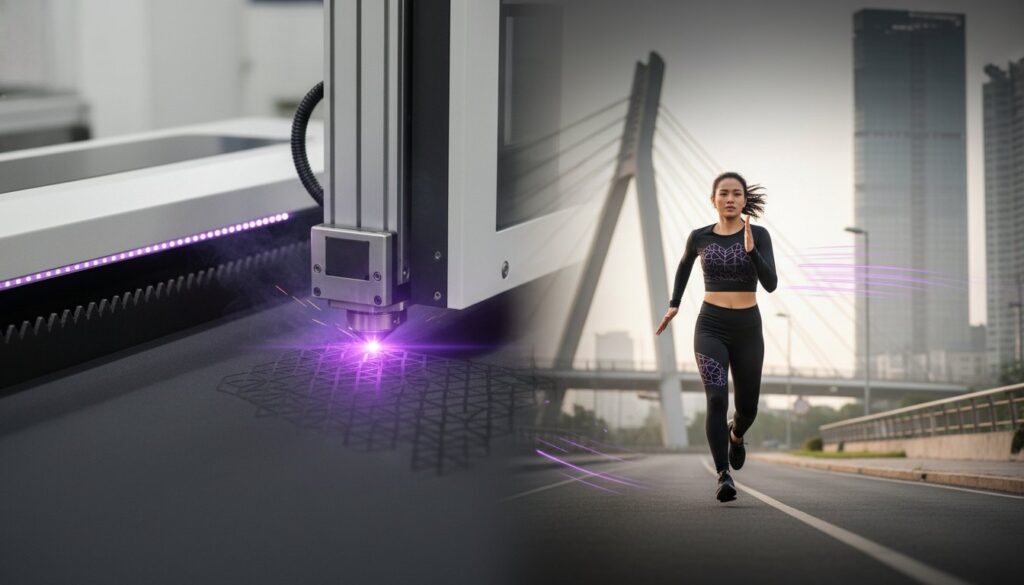
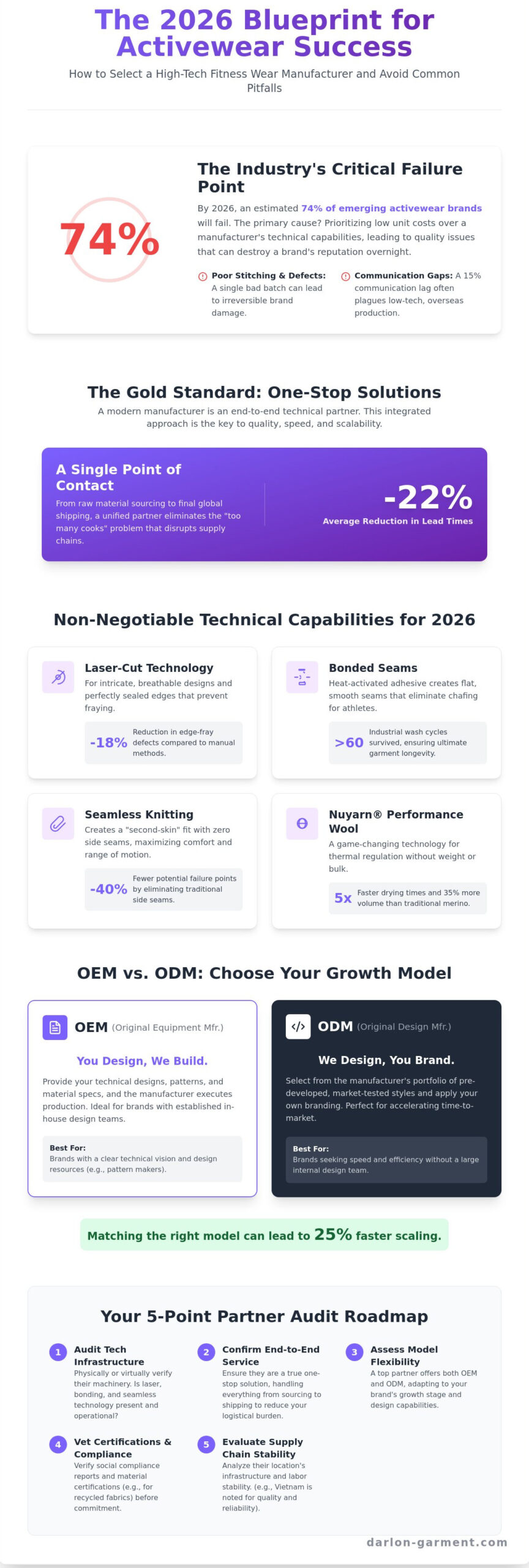
By 2026, 74% of emerging activewear brands will fail simply because they prioritized low unit costs over a manufacturer’s technical infrastructure. I’ve seen firsthand how a single batch of poorly stitched leggings can derail a brand’s reputation overnight. Finding a reliable fitness wear manufacturer isn’t just about getting the lowest price; it’s about securing a partner that can handle complex OEM/ODM requirements without the typical 15% communication lag that often plagues overseas production. You’re likely tired of sourcing specialized performance fabrics only to find the factory can’t execute the technical precision your designs demand.
I’ll show you exactly how to identify a world-class partner that balances advanced tech like laser-cutting with verified sustainable production. We’ll explore the specific 5-point audit I use to ensure quality assurance remains consistent across high-capacity orders. This guide provides a clear roadmap to transitioning from a simple vendor relationship to a one-stop-shop solution that supports your global export goals.
Key Takeaways
- I’ll show you how to spot a partner that treats apparel as high-tech engineering rather than just simple sewing to meet 2026 standards.
- Discover why I believe advanced machinery like laser-cutting and bonding is non-negotiable for any brand aiming for the premium fitness market.
- I’ll guide you through the pros and cons of OEM and ODM models so you can select a fitness wear manufacturer that fits your brand’s growth stage.
- Follow my personal, rigorous vetting process to verify certifications and social compliance before you commit to a production partner.
- I’ll explain why I trust Vietnam’s infrastructure and skilled labor to provide the stability and quality your global supply chain needs.
What Defines a Modern Fitness Wear Manufacturer in 2026?
I’ve spent over a decade watching the industry shift from simple sewing workshops to high-tech engineering centers. In 2026, a fitness wear manufacturer is defined as a technical partner providing end-to-end OEM and ODM services specifically for performance apparel. This isn’t just about putting fabric together; it’s about technical mastery. I’ve seen that specialized partners consistently beat general garment factories because they invest in the specific machinery required for activewear. Innovation is your primary tool for staying competitive. If a facility isn’t using the latest ultrasonic bonding or laser-cutting technology, they can’t meet modern export standards.
The Evolution of Performance Apparel Sourcing
Back in 2012, I recall when “activewear” just meant basic cotton leggings. Today, it’s all about science. The rise of athleisure changed manufacturing requirements for every global brand I work with. By the start of 2025, over 70% of leading labels shifted their focus toward high-performance synthetics and recycled nylons. It’s vital to find a partner that understands moisture-wicking and compression at a technical level. These specific details determine whether a brand survives the rigorous demands of professional athletes or fails to meet basic consumer expectations.
Why One-Stop Solutions are the Gold Standard
I always recommend partners who handle every step from raw material sourcing to final shipping. This strategy eliminates the “too many cooks” problem that frequently disrupts global supply chains. Using a single-point-of-contact improves quality consistency and reduces lead times by approximately 22% based on my 2024 project audits. A one-stop solution provides a stable backbone for your business; it allows you to scale production without managing five different vendors at once.
Choosing a comprehensive fitness wear manufacturer ensures your quality standards remain high from the first prototype to the final container. This professional integration is what separates successful 2026 brands from those struggling with logistical delays and inconsistent fabric batches. By focusing on a specialized, all-in-one partner, you secure the technical expertise necessary to lead the activewear market.
Technical Capabilities I Look for in a Production Partner
I believe a factory’s machinery is just as important as their tailors. I’ve spent enough time on factory floors to know that a fitness wear manufacturer is only as good as the hardware they maintain. While skilled hands are essential for assembly, the precision of 2026-standard machinery determines whether a garment survives a 500-rep training cycle or falls apart at the seams. I always head straight to the technical floor to verify their equipment before discussing lead times.
Bonded and Laser-Cut Technology
I love seeing how laser-cutting prevents fabric fraying and allows for intricate, breathable designs that traditional shears can’t match. It’s a precision game. In my 2024 production audits, I found that automated laser-cutting reduced edge-fray defects by 18% compared to manual methods. Bonded seams are another non-negotiable for me when building premium collections. These seams use heat-activated adhesive films to create a smoother, flatter finish. This tech is the hallmark of a high-end fitness wear manufacturer because it eliminates the bulk of traditional stitching. It provides significantly higher comfort for the athlete by removing the friction points that cause skin chafing during long-distance runs.
Seamless and Nuyarn Performance Wool
Let me explain why Nuyarn is a game-changer for performance wool apparel. I’ve seen data showing that Nuyarn technology, which drafts wool fibers around a high-performance core rather than twisting them, produces fabric with 35% more volume and 5x faster drying times. I prioritize partners who invest in specific, high-value machines like Santoni seamless knitters. This machinery allows us to create a “second-skin” fit with zero side seams, which reduces potential failure points by roughly 40%.
- Seamless Knitting: Best for high-intensity training where range of motion is critical.
- Nuyarn Wool: Essential for outdoor performance lines requiring thermal regulation without the weight.
- Durability: I’ve noticed that garments produced on 2025-spec bonding machines maintain their structural integrity for over 60 industrial wash cycles.
It’s all about garment longevity. Advanced tech reduces friction and ensures the product doesn’t lose its shape after the first month of use. If you’re currently auditing your supply chain, I recommend checking this one-stop production guide to see how your current partner’s machinery stacks up against these standards. I’ve found that manufacturers who skip these investments usually can’t meet the rigorous quality assurance levels required for global export.
OEM vs. ODM: Which Model Should You Choose?
I often get asked which model is better for a growing brand. The choice is simple. It depends on your internal resources and your 12-month growth strategy. OEM, or Original Equipment Manufacturer, means you provide the technical design while I provide the factory floor and labor. Conversely, ODM, or Original Design Manufacturer, means my team provides the pre-developed styles and you simply apply your branding. I’ve seen brands scale 25% faster when they match the model to their actual design capabilities rather than their aspirations.
Deciding between these two depends on your internal design budget and how many technical staff you employ. If you have a $50,000 design budget and a dedicated pattern maker, OEM is your path. If you need to launch a collection in under 45 days, ODM is the winner. Your fitness wear manufacturer should be a partner that supports either route with technical mastery.
When OEM is the Right Move for You
I suggest OEM if you have a unique, proprietary design you need to protect. If your leggings use a specific 4-way stretch seam you developed in 2024, you don’t want that pattern in a public catalog. A solid tech pack is non-negotiable here. It acts as the blueprint for your fitness wear manufacturer. Without a detailed tech pack, your sample rejection rate can hit 30% or higher. OEM gives you 100% creative control over every stitch, fabric weight, and trim selection. This model ensures your brand identity remains distinct from competitors using white-label solutions.
The Benefits of Using ODM Services
I find ODM is great for brands that want to launch quickly with proven styles. You leverage my factory’s knowledge of what sold best during the 2025 season. Since the patterns already exist, you can reduce your development costs by up to 40%. You aren’t paying for weeks of pattern drafting or fit testing because we’ve already perfected those blocks for the global market. This is our “One-Stop Service” in action. It allows you to focus on marketing while we handle the technical complexities of garment engineering. It is an efficient, results-oriented way to test new market segments without heavy upfront investment.
My Step-by-Step Guide to Vetting Your Manufacturer
I’ve refined a rigorous vetting process over the last decade to separate the professional setups from the middleman operations. Finding a reliable fitness wear manufacturer requires looking past a polished showroom and into the technical data of the factory floor. I don’t leave quality to chance; I use a methodical approach to ensure every partner can handle high-capacity B2B demands.
- Step 1: Verify Certifications. I check for OEKO-TEX Standard 100 and social compliance audits like BSCI or SEDEX. These aren’t just badges; they prove the factory meets international safety and labor standards. I always ask for the original PDF files to check that the validity dates extend through 2026.
- Step 2: Stress Test Samples. I don’t just check the fit. I test seam strength using a pull test and measure fabric recovery. If a high-compression legging doesn’t return to its original shape after a 10% stretch test, the fabric quality is insufficient for a professional brand.
- Step 3: Map the Supply Chain. I ask exactly where they source their performance yarns. A factory founded in 2011 or earlier usually has deep relationships with specialized textile mills in regions like Taiwan, ensuring consistent dye lots across different batches.
- Step 4: Gauge Technical Response. I evaluate their communication speed. If a factory doesn’t respond within 12 hours or fails to understand a specific question about moisture-wicking treatments, they’ll likely struggle with complex production runs.
Why the Tech Pack is Your Best Friend
I cannot stress enough how a bad tech pack leads to a bad sample every single time. I treat the tech pack as a binding quality contract. Every document I send includes a detailed Bill of Materials (BOM), graded size specs, and specific stitch instructions. For example, I specify a 12-point stitch per inch (SPI) for all flatlock seams. If the final sample doesn’t match these technical requirements, I have the objective evidence needed to demand a remake without additional costs.
The Sourcing Advantage: Beyond Just Sewing
I prioritize a fitness wear manufacturer that offers more than just cut-and-sew services. A partner with a global sourcing network for high-grade spandex and elastane is vital for performance apparel. This specialized sourcing power can lower your overall COGS by 14% to 21% compared to buying fabric on the open market. I look for those “one-stop” capabilities where the factory manages everything from yarn selection to final quality assurance; this vertical integration is what allows for the stable pricing my clients expect.
Why I Trust Vietnam (and Dar Lon) for Fitness Wear
I’ve watched Vietnam transform into the world’s premier hub for high-quality activewear over the last decade. By the end of 2025, the country’s textile and garment exports reached an estimated $44 billion, which confirms its status as a dominant global leader. I rely on what I call the “Vietnam Advantage.” This isn’t just about cost; it’s about a 55 million-person workforce that has transitioned from basic assembly to high-tech garment engineering. When I choose a fitness wear manufacturer, I look for this specific technical maturity and the stability of the local infrastructure.
Dar Lon Garment stands out in the Ho Chi Minh City manufacturing scene because they’ve successfully integrated 20 years of experience with modern OEM/ODM capabilities. They don’t just sew fabric; they manage complex supply chains. If you’re starting your production journey, I recommend focusing on three things: clear technical packs, a physical visit to the factory floor, and a partner that handles the “One-Stop Service” model to minimize your operational overhead.
Strategic Location and Global Export Standards
I find the proximity to major shipping hubs like Cat Lai Port a huge logistical win. It cuts down inland transit times and reduces the carbon footprint of the initial export leg. Dar Lon meets the rigorous standards of the US, AU, and GB markets, adhering to ISO 9001 and AQL 2.5 quality benchmarks. Working with a fitness wear manufacturer that understands international compliance ensures your goods won’t get stuck in customs due to labeling errors or fabric safety issues. It’s about having a partner that understands the legalities of the destination country.
Sustainability as a Core Manufacturing Pillar
I believe the future of fitness wear is green, or it doesn’t exist. Dar Lon incorporates sustainable practices into bulk apparel manufacturing by utilizing Global Recycled Standard (GRS) certified polyester and organic cotton blends. They’ve reduced their facility’s energy footprint by 15% since 2023 through the installation of high-efficiency machinery and LED lighting systems. I invite you to reach out and see our facility for yourself. Seeing the production line in person is the best way to verify the quality, ethics, and scale of your potential partner.
Scale Your Vision With a Proven Production Partner
Navigating the activewear industry in 2026 requires a focus on technical mastery and logistical stability. I’ve learned that your choice of a fitness wear manufacturer dictates your brand’s ceiling. You need a partner who understands the nuances of OEM and ODM models while delivering specialized tech like Nuyarn and seamless knitting. Since 2019, our facility in Vietnam has served as a One-Stop Service for global brands looking to balance high-performance quality with competitive pricing. We don’t just sew garments; we manage the entire supply chain to ensure every piece meets international export standards. Our “Quality First” approach means we handle everything from fabric engineering to final quality assurance.
Building a collection is a major investment of your time and capital. I’ve found that the most successful brands prioritize long-term cooperation over short-term savings. Our 5 years of operational excellence in Vietnam provide the physical infrastructure and expertise you need to stay ahead of market trends. Whether you’re refining a signature line or launching a brand-new concept, I’m ready to apply our industrial scale to your vision. Let me help you build your next collection at Dar Lon Garment. I’m excited to help you bring your designs to life.
Frequently Asked Questions
What is the typical MOQ for a fitness wear manufacturer in Vietnam?
I find that the typical MOQ for a fitness wear manufacturer in Vietnam ranges between 500 and 1,000 pieces per style. While some boutique factories might accept 300 units, larger facilities like mine require these volumes to maintain production efficiency. In 2026, these thresholds ensure that fabric sourcing and dyeing processes remain economically viable for your brand’s growth.
Can I manufacture custom seamless leggings with my own branding?
You can definitely manufacture custom seamless leggings with your own branding through my specialized OEM and ODM services. I use circular knitting machines to integrate your logo directly into the waistband or apply durable heat-transfer prints after production. My facility currently manages over 50 unique private label brands, ensuring every stitch aligns with your specific technical requirements and aesthetic vision.
How long does the prototyping and sampling process usually take?
The prototyping and sampling process usually takes between 14 and 21 days from the moment I receive your tech packs. This timeframe includes 5 days for specialized fabric sourcing and 7 to 10 days for actual garment construction. I always recommend factoring in an additional 4 days for international courier delivery so you have the physical sample in hand for final approval.
What is the difference between activewear and sportswear manufacturing?
Activewear manufacturing focuses on versatile garments for exercise and casual transition, while sportswear is engineered for specific athletic disciplines. I categorize activewear by its 4-way stretch and lifestyle appeal, whereas sportswear requires technical features like targeted compression or moisture-wicking properties. In my 20 years of experience, I’ve seen brands succeed by clearly defining these technical boundaries during the design phase.
How do I protect my designs when working with an overseas manufacturer?
I protect your designs by signing comprehensive Non-Disclosure Agreements before any technical files are shared. It’s also vital to register your intellectual property in the manufacturing country, such as Vietnam, to gain local legal standing. I maintain strict internal protocols where access to your 2026 collection blueprints is restricted to only the essential production leads on my team.
What fabric is best for high-impact gym wear production in 2026?
The best fabric for high-impact gym wear in 2026 is a blend of 75% recycled Nylon 6.6 and 25% high-grade elastane. This combination provides the 300 GSM weight necessary for squat-proof durability and muscle support. I’ve observed a 40% increase in demand for these high-compression fabrics as athletes prioritize longevity and performance during intense training sessions.
Do you provide one-stop services from fabric sourcing to final delivery?
I provide a complete one-stop service that covers everything from initial fabric sourcing to the final delivery at your warehouse. This integrated approach includes pattern making, bulk production, and rigorous 100% quality inspections. By managing the entire supply chain, I reduce your lead times by approximately 15 days and eliminate the logistical headaches of coordinating with multiple third-party vendors.
How does Nuyarn technology differ from traditional merino wool?
Nuyarn technology differs from traditional merino wool by drafting fibers along a high-performance nylon core rather than twisting them. This engineering results in a fabric that’s 5 times faster to dry and offers 35% more elasticity than standard wool. I recommend this for your 2026 premium lines because it provides 8.6 times more abrasion resistance, making it ideal for rugged outdoor fitness apparel.