
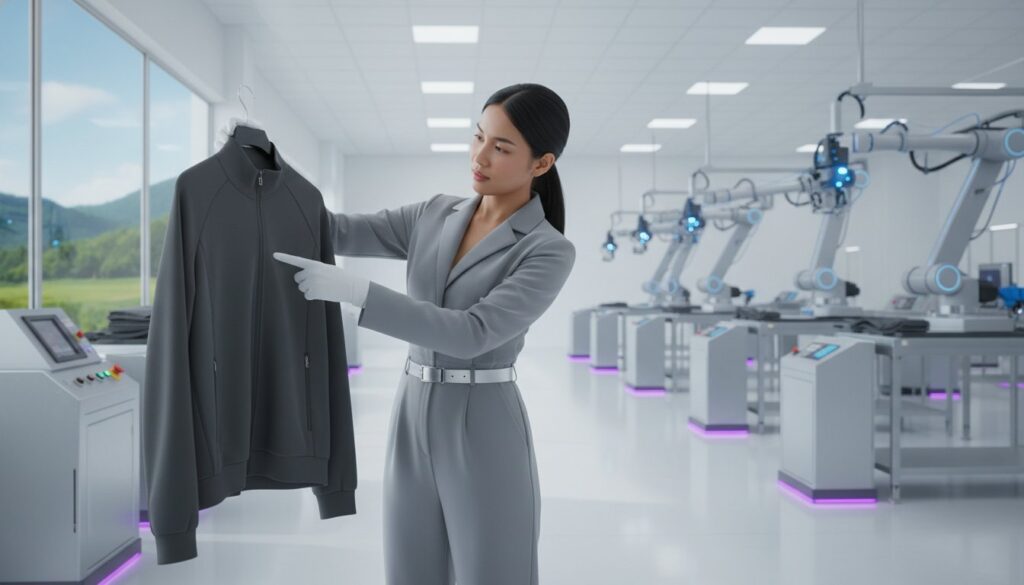
What if I told you that sticking with your current factory is actually a bigger financial risk than the uncertainty of switching to a new one? I’ve seen it happen too often; brands tolerate missed deadlines and dipping quality because the thought of internal pushback feels exhausting. I know the pressure you’re under to reduce costs without losing the technical edge of your sportswear or seamless lines. Getting buy-in for a new manufacturer in 2026 requires more than just a lower quote. It requires a strategy that addresses high interest rates and new global regulations like the active enforcement of PFAS restrictions.
I’m going to show you exactly how to build a bulletproof business case to convince your stakeholders that switching to a new apparel manufacturer is the right move. I’ll share the specific framework I use to turn technical data and supply chain logistics into a narrative that wins over even the most skeptical CFO. We’ll cover everything from auditing smart manufacturing capabilities to leveraging regional trade advantages. By the end, you’ll have the data-backed arguments you need to lead this transition with absolute confidence.
Key Takeaways
- Learn how to quantify the hidden costs of manufacturing friction so you can prove that “good enough” is actually draining your bottom line.
- I’ll share the specific metrics-margin, lead time, and quality-that I use when getting buy-in for a new manufacturer to ensure the CFO sees the immediate ROI.
- Discover my strategy for answering the hardest stakeholder questions about regional risk and the logistical advantages of Vietnam in 2026.
- Get a breakdown of my 5-step internal pitch deck designed to move your team from defending the status quo to embracing a more reliable partner.
- Understand why technical mastery in areas like Nuyarn performance wool and laser-cut bonding is the ultimate proof of a manufacturer’s long-term value.
Why Sticking with a Mediocre Manufacturer is Your Biggest Risk in 2026
I’ve learned that “good enough” is the most dangerous phrase in apparel sourcing. When I hear a team say their current factory is “fine,” I see a brand that’s slowly bleeding money. Sticking with a legacy partner because it’s comfortable feels safe, but it’s actually a massive liability in the current market. In my experience, getting buy-in for a new manufacturer is often difficult because internal teams fear the unknown. However, the risk of doing nothing is far higher than the risk of moving. We’re no longer in an era where you can afford a transactional relationship with a vendor. You need a partner that understands the technical complexities of modern activewear and swimwear.
The Invisible Costs of Your Current Factory
We often look at the unit price on a quote and think we’re winning. I look at the spreadsheet differently. I calculate the cost of air-freighting a late order of performance apparel just to hit a retail launch date. That single emergency shipment can wipe out your entire margin for the quarter. Then there’s the defect rate. A 5% defect rate might seem manageable on paper, but it’s a disaster for brand reputation compared to a 1% rate. I’ve spent too many hours chasing emails and status updates instead of focusing on designing the next collection. This friction is a silent killer of productivity. Before I even start the supplier evaluation process, I make sure to document these leaks. It’s the only way to show the board that our current “safe” choice is actually costing us a fortune in lost time and quality claims.
Why Sourcing Agility is the New Competitive Edge
The apparel market in 2026 doesn’t wait for anyone. We’ve moved past the old model of two seasons a year; now it’s about micro-seasons and rapid pivots. If your factory can’t turn a sample in days or adjust a run of seamless garments mid-cycle, you’re losing market share to more nimble competitors. Understanding how garments are made at a technical level is essential here. If a partner uses outdated bonding or laser-cut machinery, they simply can’t move at the speed you need to stay relevant. I’ve found that “safe” sourcing with legacy vendors is the riskiest move right now because they lack the infrastructure to be agile. Getting buy-in for a new manufacturer becomes much easier when you frame it as a survival strategy. We aren’t just looking for someone to sew labels. We’re looking for a strategic manufacturing partner that acts as a powerful, silent backbone for our entire operation.
Building the Business Case: How I Prove the ROI of a New Factory
When I’m in the boardroom, I don’t just pitch a new name. I pitch a better spreadsheet. Stakeholders, especially the CFO, need to see a tangible return on investment before they’ll sign off on a major supply chain shift. I’ve found that getting buy-in for a new manufacturer is much smoother when you focus on three core metrics: margin, lead time, and quality. If you can show how a new partner improves all three, the decision becomes logical rather than emotional. I usually start the process of writing a business case by contrasting the sticker price of our current vendor with the true all-in cost of a new one. It’s about moving the conversation from “what does this cost?” to “what does this save?”
The “Total Cost of Ownership” Framework
I use a Total Cost of Ownership framework to reveal the hidden expenses of our current setup. For instance, choosing a sportswear factory in Vietnam often unlocks significant duty-free advantages due to various Free Trade Agreements. When you factor in reduced logistics overhead and the efficiency of a one-stop-shop OEM/ODM service, the “expensive” quote often turns out to be the most profitable choice. I also account for the cost of capital, which is a primary concern in 2026 given the current high interest rates. A factory that offers faster lead times reduces the amount of capital tied up in inventory, which is a huge win for any finance team. I make sure to quantify these savings during the getting buy-in for a new manufacturer phase to show that the move is financially disciplined.
Proving Quality Before the Bulk Order
To de-risk the move, I use prototyping as a low-cost proof of concept. I don’t wait for a bulk order to prove a factory’s worth. I send a complex tech pack for a piece of bonded activewear or a seamless garment and let the physical results speak for themselves. I always show the “guts” of the garment to my internal team. Seeing the precision of laser-cut edges and the technical strength of bonded seams builds immediate trust that a slide deck simply can’t achieve. For extra validation, I rely on 3rd party audits to provide an objective stamp of approval on social compliance and technical capability. If you want to see this level of technical mastery in action, you can review our specialized manufacturing processes to see how we handle high-performance apparel. Using these physical proofs allows me to answer the “What if they can’t do it?” fear with hard evidence before we ever cut a single production line.
Navigating the “Risk Talk”: How I Answer the CFO’s Hardest Questions
I’ve sat through enough budget reviews to know that the “Risk Talk” is usually where the conversation stalls. When I’m getting buy-in for a new manufacturer, I expect the CFO to ask the hard questions. “What if they disappear?” or “How do we handle the switching cost?” are standard. I don’t dodge these. Instead, I lead with social proof. I show them the factory’s current client list. If they’re already producing high-performance activewear for global brands, they aren’t going to vanish overnight. I also present a phased transition plan that addresses the “all-or-nothing” fear. By showing a clear, step-by-step migration, I transform a perceived gamble into a managed strategic shift.
Addressing the Geographic and Cultural Gap
Distance is a psychological barrier, not a logistical one in 2026. I explain to nervous execs that Vietnam is closer than they think. Modern project management tools and real-time data tracking have bridged the communication gap. I’ve found that choosing the right fitness wear manufacturer requires a partner who already operates on global standards. I point to the stability of the Vietnamese garment sector, which has seen massive infrastructure investment recently. This isn’t just about finding a factory; it’s about finding a partner that speaks the corporate language of compliance and reliability that we do.
The Phased Rollout: De-risking the Transition
One of my most successful tactics for getting buy-in for a new manufacturer is the phased rollout. I never suggest moving the entire brand at once. That’s a recipe for internal panic. Instead, I start with a “capsule collection” or a specific line, like our new swimwear or sleepwear range. This allows the team to build confidence without over-extending our exposure.
- Parallel production: For the first season, I might run a small percentage of production at both the old and new factories. It costs a bit more upfront, but it’s the ultimate insurance policy.
- Clear KPIs: I set strict performance indicators for the first 90 days. We track sample turnaround, defect rates on the first 500 units, and communication lag times.
This approach allows the team to see the new partner in action without betting the company’s entire quarterly revenue on them. When the results come in and the quality of the bonded and laser-cut apparel exceeds our current standards, the resistance usually evaporates. We move from a place of fear to a place of factual, evidence-based performance.
My 5-Step Internal Pitch Deck for Switching Manufacturers
I’ve found that getting buy-in for a new manufacturer depends entirely on how you structure your internal pitch deck. I don’t use abstract values or vague promises of better service. Instead, I use a disciplined five-step logic chain that leaves no room for doubt. This approach turns a potentially emotional debate about “loyalty” to an old vendor into a clear-headed business decision.
Step 1 is what I call the “State of the Union.” I present a slide of lost opportunities, showing the data on our current factory’s failures. I don’t just say they’re late; I show the percentage of missed retail windows and the precise cost of those delays. Step 2 is the Opportunity. I introduce the new region and partner capabilities, focusing on why Vietnam is the strategic choice for our 2026 goals. Step 3 highlights the Technical Edge. This is where I showcase innovation like Nuyarn performance wool or seamless tech that our current partner simply cannot match. Step 4 covers the Financials. I use the Total Cost of Ownership framework to present a side-by-side comparison of total costs, not just the unit price. Finally, Step 5 is the Roadmap. I provide the exact timeline from the initial tech pack to the final delivery at our warehouse.
Visualizing the Quality Difference
I never go into a pitch meeting without physical samples and a magnifying glass. I want my stakeholders to feel the weight of the fabric and see the precision of the stitching for themselves. I often compare the elastane fabric recovery rates between the old factory and the new one. If the new samples hold their shape after 100 stretches while the old ones sag, the technical argument is won. Letting the product development quality speak for itself is much more effective than any slide I could design. It proves that the “risk” of switching is actually the only way to protect our brand’s premium positioning.
Setting the Timeline for Success
A clear roadmap is the best way to calm a nervous executive team. I map out every milestone: prototyping, raw material sourcing, and production cycles. I always include “buffer time” in the schedule to manage expectations and account for any learning curves. A successful first run isn’t just about getting the product; it’s about meeting the agreed-upon KPIs without emergency interventions. If you’re ready to start building your own business case, you can explore our technical capabilities to see the specific advantages we bring to the table. This transparency builds the internal trust required to move forward with a new partnership while maintaining operational stability.
Moving Forward: Why Dar Lon Garment is My Choice for 2026
When I look at the global map for sourcing, I’m not just looking for a country; I’m looking for a specific type of industrial infrastructure. In the “Vietnam vs. The World” debate, I choose Vietnam because of the strategic balance between trade stability and technical evolution. Specifically, I’ve found that Dar Lon Garment represents exactly what I need for my 2026 collections. Established in 2019, this facility doesn’t carry the “legacy weight” of older factories stuck in outdated workflows. Everything from their floor layout in Binh Phuoc Province to their digital tracking is built for the modern era. This makes getting buy-in for a new manufacturer a much easier sell to my leadership because I’m pitching a partner that is already future-proofed.
I look for partners who invest in technology, not just more sewing machines. Dar Lon Garment stands out because of their focus on Nuyarn performance wool and laser-cut apparel, which is a game changer for my activewear and swimwear lines. Many factories claim to do technical apparel, but few have the machinery to execute it at scale without quality dips. Their technical mastery allows me to push design boundaries that other vendors would shy away from. It’s about having a partner that can handle the complex technical specs I throw at them without missing a beat.
Innovation as a Standard, Not an Option
I’m seeing a massive shift toward natural fibers and performance wool in the global sportswear market. The technical setup at Dar Lon Garment, featuring automatic sewing and precision laser cutting, ensures these delicate yet high-performance materials are handled correctly. This isn’t an optional upgrade; it’s the standard required to compete today. When I talk to their team, I’m talking to people who understand the physics of the fabric, not just the cost of the thread. This level of expertise is what I highlight when I’m getting buy-in for a new manufacturer with my product development team.
A Partner for Global Growth
What really seals the deal for me is the comprehensive one-stop service model. Whether I need OEM production for existing designs or ODM support to develop new seamless garments or sleepwear, Dar Lon Garment has the internal expertise to handle it. This reduces the number of “moving parts” in my supply chain, which is a major factor for my operations team. They want less complexity; I want higher quality. The factory delivers both through a disciplined, methodical approach to production that mirrors the logical flow of a modern production line.
The peace of mind I get from their rigorous quality control and the tariff advantages of their Vietnam location makes this a strategic win for any professional buyer. If you’re tired of managing factory friction and want to focus on scaling your brand with a disciplined partner, Ready to upgrade your production? Let’s talk.
Securing Your Supply Chain for 2026 and Beyond
Transitioning away from a legacy vendor is a strategic move to protect your brand’s future. I’ve shown you how to quantify the true cost of manufacturing friction and how to build a pitch deck that speaks the CFO’s language. Success in getting buy-in for a new manufacturer depends on replacing fear with data. By focusing on technical mastery and a phased rollout, you can turn a perceived risk into a clear competitive advantage.
Since 2019, Dar Lon Garment has provided specialized Nuyarn performance wool and comprehensive OEM/ODM solutions. Their investment in automatic sewing and advanced laser-cutting technology ensures your collections meet the highest technical standards. This infrastructure is designed to serve as the silent, powerful backbone your brand needs to scale globally. If you’re ready to move beyond “good enough” production, it’s time to take the first step.
Partner with Dar Lon Garment for Your 2026 Collections
You have the framework and the tools to make this shift. I’m confident that with the right data and the right partner, you’ll lead your team toward a more reliable and profitable production cycle.
Frequently Asked Questions
What is the biggest mistake brands make when switching manufacturers?
The biggest mistake I see is focusing solely on the unit price while ignoring the technical fit. If you select a factory that can’t handle complex bonded seams or specialized activewear fabrics, the low price won’t matter when the final product fails. I always recommend testing a small category first to verify that their machinery and quality control truly match your design requirements before moving the entire brand.
How do I calculate the ROI of moving production to Vietnam?
I calculate ROI by looking at the “Total Cost of Ownership” instead of just the invoice price. This includes the savings from faster sample turns and the reduction in emergency air-freight costs when production hits its deadlines. When you add the duty-free benefits of sourcing from Vietnam, the financial case for a more reliable and technically advanced partner becomes very clear to any executive team.
How long does it typically take to get buy-in for a new factory?
In my experience, getting buy-in for a new manufacturer typically takes several months. This timeline accounts for the research phase, technical sampling, and the multiple internal review cycles required to move a project forward. I’ve found that rushing this process leads to skipped due diligence, so I prefer to allow enough time for the team to feel confident in the new partner’s capabilities.
Should I tell my current manufacturer I am looking for a new one?
I don’t recommend informing your current vendor until you’ve fully secured a new partner and approved production-ready samples. If the relationship is already struggling, revealing your exit strategy too early can lead to deprioritized orders or quality issues on your final runs. I prefer to maintain professional transparency only after the safety net of a new production line is fully operational and tested.
What documents do I need to prepare for a new manufacturer pitch?
I’ve found that getting buy-in for a new manufacturer is much easier when you have a complete technical dossier. You’ll need detailed tech packs, a thorough cost-of-ownership analysis, and physical samples that prove the factory’s quality. This evidence helps shift the internal conversation from a subjective “gut feeling” to an objective business decision based on technical and financial facts.
How do I handle internal teams who are resistant to a new factory?
I handle internal resistance by involving the key skeptics directly in the development phase. When a product lead sees the precision of a new seamless garment sample, their technical concerns usually evaporate. I focus on how the new partner solves their specific daily pains, such as reducing the time they spend chasing status updates or dealing with quality claims from the warehouse.
Is it better to switch manufacturers during the off-season or peak season?
It’s always better to switch during the off-season when production volumes are lower and the factory has more capacity for sampling. This timing provides a necessary buffer to refine technical specs without the pressure of a major retail launch. Transitioning during peak season is a high-risk move that leaves no room for the learning curves that naturally occur during a new partnership.
What are the red flags to look for during the initial buy-in phase?
The biggest red flags I look for are slow communication and vague answers regarding machinery. If a factory can’t explain the specifics of their laser-cutting process or their fabric sourcing, they likely don’t have the technical mastery they claim. I also watch for a lack of transparency during the facility tour. A dependable partner should be proud of their infrastructure and willing to show you exactly how their lines operate.