
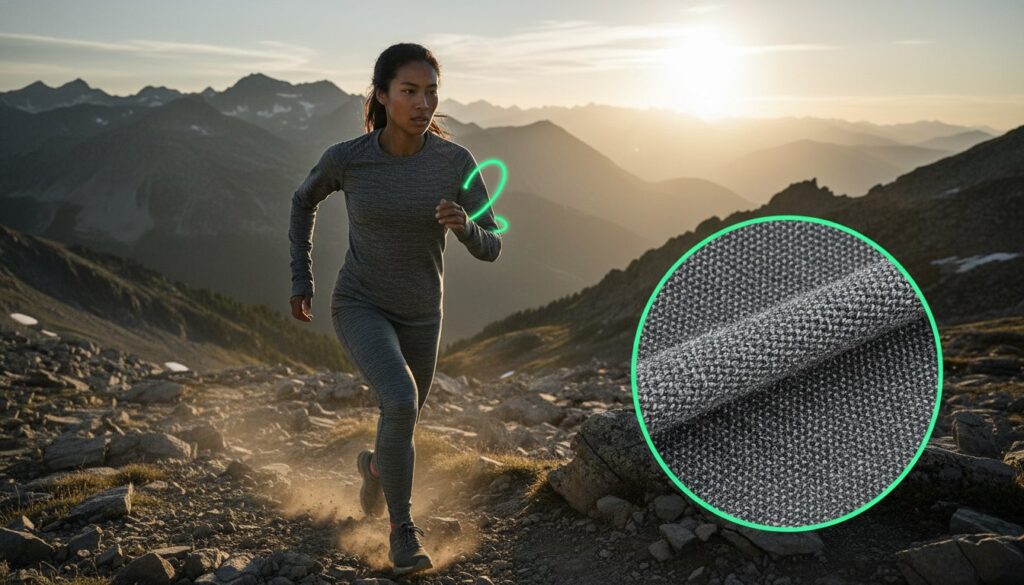
Did you know that conventional merino wool can take up to five times longer to dry than a high-tech synthetic, often leaving your customers damp and chilled after a high-intensity workout? I’ve spent years watching brands struggle with the inherent trade-offs of traditional natural fibers. You likely appreciate the natural odor resistance of wool but can’t ignore the reality that it often pills easily or loses its shape after a few heavy washes. This is exactly why I’m betting so heavily on the benefits of nuyarn performance wool for the 2026 market. Unlike traditional ring-spun methods that twist the life out of the fiber, Nuyarn uses a twist-free spinning technology that preserves the natural integrity of the wool.
I understand the frustration of designing a premium piece only to have it fail in the field because the fabric is simply too fragile. In this article, I’ll show you why this technology is a structural engineering breakthrough that finally makes wool a powerhouse for high-impact sportswear. We’ll explore the specific metrics, including an 8.8x increase in abrasion resistance and 50% greater burst strength. I’ll also share how I help brands source and manufacture these collections to stay ahead of the strict new 2026 environmental standards and the transition to the bluepass mark system.
Key Takeaways
- I’ll explain how Nuyarn’s twist-free spinning preserves the wool’s natural structure. This creates a stronger, more elastic yarn than traditional ring-spun methods.
- You’ll discover the core benefits of nuyarn performance wool, including its ability to provide 35% more thermal retention without increasing a garment’s weight.
- Learn why this fiber’s superior durability makes it the ideal choice for activewear that resists pilling.
- I’ll show you how Nuyarn supports sustainability by building garments that last longer and don’t need synthetic chemical treatments.
- Find out how I help brands handle the technical side of manufacturing, from sourcing blends to mastering laser-cutting.
What is Nuyarn Performance Wool and Why am I Obsessed With It?
I’ve spent a significant portion of my career on factory floors, and it’s quite rare to encounter a technology that fundamentally shifts my perspective on a raw material. Nuyarn is that exception. It isn’t just a new type of fabric; it’s a proprietary spinning technology that drafts wool fibers along a high-performance filament. While most people are focused on the fiber source, I’m focused on the engineering. By changing how the yarn is constructed, Nuyarn solves the structural weaknesses that have limited wool’s use in high-performance activewear for decades.
The magic happens because Nuyarn preserves the natural “crimp” of the merino fiber. To really grasp why this is a game-changer, you have to look at What is Wool from a biological perspective. It’s a fiber built for insulation and moisture management, but traditional manufacturing often compromises these traits. When brands ask me about the specific benefits of nuyarn performance wool, I always start with the structural integrity of the yarn itself. It doesn’t rely on the heavy twisting that characterizes standard yarn. I’ve seen the results firsthand: the yarn is loftier, it’s stretchier, and it’s significantly stronger than anything produced on a ring-spinning frame.
The End of the ‘Twist’ Era
Traditional ring-spinning is essentially a process of compression. To get strength, the machine twists the fibers together, which creates a dense, rope-like structure. This twist actually damages the wool, stripping away its natural elasticity and trapping moisture inside the yarn. Nuyarn’s twist-free method keeps the fiber structure intact. My first impression of the fabric’s hand-feel was that it felt remarkably “alive” compared to standard merino. It has a bounce and a softness that you simply can’t achieve when the fibers are under constant torsional stress. It feels more like the raw wool and less like a processed textile.
Not Your Average Merino
It’s vital to distinguish Nuyarn from “core-spun” wool. In core-spinning, wool is just a wrapper around a spandex center. Nuyarn is a structural revolution where the wool and the filament are drafted together. This isn’t just an incremental update; I believe it’s the biggest leap in wool tech in 50 years. It provides a weight-to-warmth ratio that was previously impossible. We are looking at a textile engineering breakthrough that allows us to build garments that are lighter, tougher, and more comfortable. For a brand looking to innovate, understanding the benefits of nuyarn performance wool is the first step toward creating a truly superior product line.
The 3 Biggest Performance Benefits I See in the Factory
When I run production trials in my facility, I don’t just look at how a fabric feels. I look at the data coming off the machines and the feedback from the finishing team. The benefits of nuyarn performance wool become undeniable when you compare them to standard merino in a controlled environment. I’ve spent decades working with natural fibers, and the metrics I’m seeing with Nuyarn are, quite frankly, unprecedented. It isn’t just about making a “better” wool shirt; it’s about engineering a textile that functions like a synthetic while retaining its natural soul.
In my experience, three specific performance metrics set this technology apart. First, the dry time is unmatched. Second, the thermal efficiency is significantly higher due to the increased loft. Third, the elasticity is far superior to anything produced on a traditional ring-spinning frame. When we discuss the performance benefits of wool, we usually focus on odor control, but Nuyarn amplifies the physical capabilities of the fiber. These aren’t just abstract stats. They change how a garment performs during a high-intensity workout and how it survives the rigors of industrial manufacturing. If you want to build a collection that stands out, I can help you source and develop Nuyarn performance wool apparel that meets these high standards.
Why Nuyarn Dries So Fast
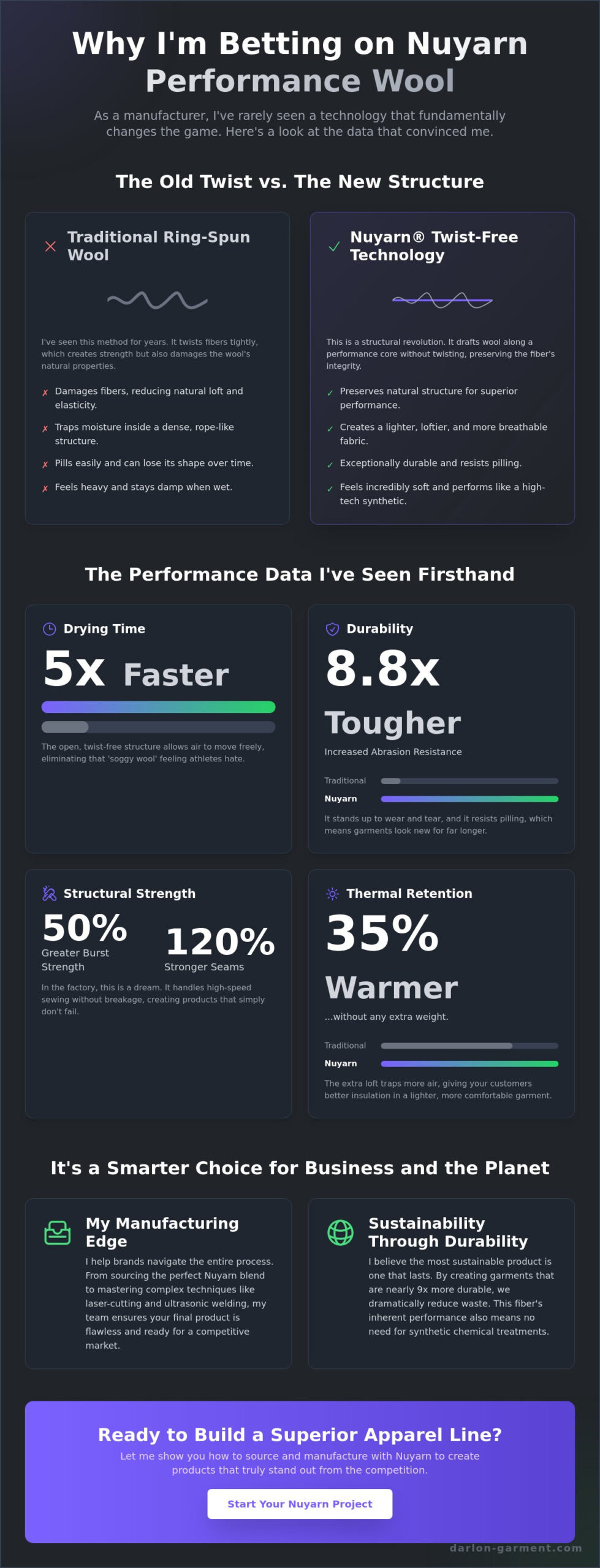
Traditional merino is a moisture sponge. Once it gets wet, it stays wet. This happens because the fibers are twisted so tightly that there’s no room for air to move. Nuyarn’s 5x faster dry time is due to its high-volume, aeration-rich structure. Because the fibers aren’t compressed by a heavy twist, there is more surface area exposed to the air. This allows moisture to evaporate almost as quickly as it is wicked away from the skin. It effectively eliminates that heavy, “soggy wool” feeling that athletes often complain about after a hard sweat session.
Strength and Burst Resistance
From a manufacturing standpoint, Nuyarn is a dream to work with. I’ve watched it handle the high-speed stress of automatic sewing machines without the frequent breakage we see with fragile ring-spun yarns. We’ve documented a 50% increase in burst strength, which is a critical metric for activewear. When you’re designing high-movement garments like leggings or base layers, the seams are under constant tension. The benefits of nuyarn performance wool include 120% stronger seams, ensuring that the garment stays together even during extreme athletic movements. This durability reduces the defect rate in the factory and increases the lifespan of the product for the end user.
Nuyarn vs. Traditional Wool: Why the Switch is Worth It
I often tell my clients: if you’re building a premium brand, you can’t afford the ‘fragile’ reputation of regular wool. We’ve all seen it. A customer buys a high-end merino base layer, and within three months, it’s covered in pills or has lost its shape entirely. Traditional ring-spun wool is beautiful, but it’s structurally limited. It relies on the friction of twisted fibers to stay together, which eventually fails under the stress of repeated use. In my factory, I’ve seen how the benefits of nuyarn performance wool fundamentally change this dynamic by providing a structural integrity that traditional methods simply can’t match.
One of the biggest advantages I’ve noticed is the weight-to-warmth ratio. Because the yarn isn’t compressed by a heavy twist, you can achieve significantly higher warmth with a much lighter fabric weight. This allows brands to design garments with a lower GSM (grams per square meter) that still outperform heavier, bulkier traditional wool pieces. It’s a massive win for the end-user who wants to move fast without being weighed down. Beyond just comparing it to other wools, I’ve found that Nuyarn actually competes with high-end synthetics. While polyester blends are durable, they often feel plastic-like and trap odors. Nuyarn matches that synthetic-level durability while maintaining the natural, breathable soul of wool.
Solving the Pilling Problem
Traditional merino is notorious for pilling because short fibers eventually migrate to the surface and tangle. Nuyarn’s drafting process keeps those fibers locked into the core filament. This means the garment maintains its “new” look even after 50 or more industrial wash cycles. I take this very seriously in my facility. You can read more about how garments are made and the specific ways I test for pilling and abrasion resistance before any collection leaves the floor. The result is a piece of clothing that doesn’t just perform well on day one, but stays in the customer’s rotation for years.
The ‘Loft’ Factor
The 35% increase in volume isn’t just a marketing statistic; it creates a superior microclimate against the skin. This loft allows for better aeration and moisture management, making it the perfect choice for brands looking to create ‘all-season’ apparel. By utilizing the benefits of nuyarn performance wool, I can help you build pieces that are warm enough for winter but breathable enough for a spring run. It eliminates the “bagging out” effect common in wool leggings, ensuring the garment snaps back to its original shape every time.
The Sustainability Argument: Longevity is the New Green
I’m seeing a massive shift in global sourcing toward materials that prioritize life cycles over short-term trends. For years, the industry focused on recycled synthetics, but in 2026, the conversation has moved toward durability. It’s common sense. The most sustainable garment is the one that doesn’t need to be replaced. One of the primary benefits of nuyarn performance wool is that it aligns perfectly with the “buy less, buy better” consumer mindset I’m seeing across international markets. When a piece of clothing lasts longer, it stays out of the landfill. This is a core tenet of sustainable fashion that actually makes financial sense for brands and consumers alike.
The regulatory landscape is also forcing this change. With the EU’s Empowering Consumers for the Green Transition (ECGT) directive coming into full effect by September 2026, environmental claims must be verifiable and supported by credible evidence. I help my partners navigate these requirements by focusing on high-performance materials that have measurable longevity. Nuyarn isn’t just a marketing story; it’s a structural solution to the waste problem in the apparel industry. If you are ready to transition your production to these high-standard materials, you can source Nuyarn performance wool apparel through my facility to ensure your collection meets these new global expectations.
Chemical-Free Performance
Nuyarn achieves its moisture-wicking and thermal capabilities through its physical structure rather than synthetic chemical finishes. This is a critical advantage given the full restriction on PFAS in bluesign APPROVED materials that began in January 2026. Because the performance is mechanical, it doesn’t wash out over time. This makes it an excellent choice for hypoallergenic marketing and customers with sensitive skin. You can find more details on why this matters in The Manufacturer’s Guide to Natural Fibers, where I discuss the broader shift in global sourcing.
Reducing the Replacement Cycle
The data is clear. Independent testing shows that Nuyarn is 8.8x more resistant to abrasion than conventional ring-spun merino. In a factory setting, I see this durability translate to fewer defects and a much tougher end product. For brands focused on “slow fashion” principles, this is the ultimate selling point. If a base layer survives years of heavy use instead of months, the environmental footprint of that garment is slashed. By leveraging the benefits of nuyarn performance wool, you’re building a brand reputation based on industrial-grade reliability rather than disposable fashion.
How I Help Brands Manufacture Nuyarn Collections in Vietnam
I’ve spent the previous sections explaining why this technology is a structural game-changer. Now, I want to talk about how I actually bring these products to life in my facility. Betting on a new material is only half the battle; the other half is ensuring that the manufacturing process respects the engineering of the yarn. Vietnam has become the ideal hub for this kind of work because we’ve invested heavily in the technical infrastructure required to handle high-performance textiles at scale. We combine deep technical skill with the high-capacity production lines that international brands require to stay competitive in 2026.
Sourcing the right Nuyarn blends is the first critical step I take with my partners. The benefits of nuyarn performance wool are versatile, but they must be matched to the specific application. For example, an ultra-lightweight 125 GSM tee for summer trail running requires a different drafting ratio than a heavy 280 GSM hoodie designed for alpine mid-layers. I work closely with yarn suppliers to ensure the blend—whether it’s pure merino or a nylon mix—is optimized for the garment’s end use. Once the material is in the factory, I insist on rigorous prototyping. I don’t move to bulk production until we’ve run multiple samples to test how the specific batch handles tension and heat.
Technical Sourcing and Tech Packs
I help brands translate their initial design concepts into Nuyarn-friendly tech packs. Technical wool doesn’t behave like standard cotton or polyester; it has unique stretch and recovery properties that must be accounted for in the pattern cutting. If you’re looking for more guidance on navigating the local manufacturing landscape, I’ve written a strategic guide on Choosing a Sportswear Factory in Vietnam. It’s also worth checking out my 2026 insider guide on Choosing the Right Fitness Wear Manufacturer to see how we handle specialized assembly for activewear.
Scaling Your Nuyarn Production
When it’s time to scale, I manage the nuances of laser cutting and automatic sewing. Laser cutting is essential for technical wool because it seals the edges, preventing the fraying that can occur with mechanical blades. My team also calibrates our automatic sewing machines to handle the increased loft of Nuyarn without crushing the yarn’s structure. We maintain strict quality control at every stage of the assembly line to ensure that the 120% stronger seams I mentioned earlier are actually achieved in the final product. Minimum Order Quantities (MOQs) for Nuyarn can be higher than standard wool due to the specialized spinning process, but I help my clients navigate these logistics to find a balance that works for their growth. If you’re ready to see the benefits of nuyarn performance wool in your own collection, let’s start a conversation about your next project.
Building the Future of Performance Wool
I believe the shift toward structural engineering in textiles is irreversible. We’ve moved past the era where natural fibers had to be fragile to be premium. By choosing to leverage the benefits of nuyarn performance wool, you’re not just making a better garment; you’re future-proofing your brand against the rising demand for longevity and technical excellence. We’ve seen how this technology solves the traditional headaches of slow drying times and pilling, allowing wool to finally compete on equal footing with the most advanced synthetics.
My facility in Vietnam is specifically equipped to handle these high-performance materials. We combine specialized Nuyarn production experience with advanced laser-cutting and bonding technology to ensure every piece meets industrial-grade standards. As a high-capacity OEM/ODM partner, I’m here to act as the silent backbone for your next collection, providing the technical mastery your brand deserves. Ready to build your Nuyarn collection? Contact me at Dar Lon Garment today. I’m excited to help you redefine what’s possible with performance apparel.
Frequently Asked Questions
Is Nuyarn itchy like regular wool?
No, Nuyarn isn’t itchy because it preserves the natural softness of the merino fiber. Traditional wool often feels prickly because the heavy twist forces fiber ends to point outward against the skin. Since Nuyarn’s twist-free method keeps the fibers aligned and flat, the fabric feels smooth and comfortable. It’s an excellent choice for base layers where skin contact is constant and comfort is a priority.
How do you wash and care for Nuyarn garments?
Is Nuyarn better than synthetic fabrics like polyester?
Nuyarn outperforms polyester by offering superior thermal regulation and natural odor control without the plastic feel. While synthetics are known for durability, the benefits of nuyarn performance wool include matching that toughness while being 35% more elastic. It doesn’t rely on chemical finishes to wick moisture, so the performance won’t degrade over time. It’s a more sustainable, high-performance alternative for brands that want to avoid a purely synthetic lineup.
Why is Nuyarn more expensive than traditional ring-spun wool?
The higher cost reflects the specialized machinery and technical expertise required for the drafting process. It’s a more complex manufacturing sequence than traditional ring-spinning, which is a commoditized technology. However, I remind my clients that the value lies in the lower defect rate and the 8.8x increase in abrasion resistance. You’re paying for a product that lasts significantly longer, which reduces the long-term cost per wear for the consumer.
Can Nuyarn be used for summer activewear or just winter gear?
Nuyarn is highly effective for summer activewear due to its incredible moisture-wicking speed and aeration. Because it’s 5x faster drying than traditional merino, it doesn’t get heavy or swampy in the heat. I help brands develop ultra-lightweight blends that provide sun protection and cooling during high-output summer activities. It’s an all-season solution that manages the body’s microclimate regardless of the external temperature.
What is the typical lifespan of a Nuyarn performance tee?
A Nuyarn performance tee typically lasts several years of heavy use, which is a massive improvement over the months you might get from standard wool. In my factory tests, we see the fabric maintain its burst strength and shape even after 50 wash cycles. The 120% stronger seams mean the garment won’t fail at the stress points. It’s built for industrial-grade durability, making it a reliable staple in any athlete’s wardrobe.
Does Nuyarn retain the natural odor-resistant properties of merino wool?
Can Nuyarn be blended with other fibers like Tencel or recycled polyester?
I frequently work with custom blends that integrate Nuyarn with fibers like Tencel or recycled polyester. These combinations allow us to fine-tune the fabric’s hand-feel, drape, and price point. For example, adding Tencel can increase the cooling sensation for summer collections, while recycled polyester adds an extra layer of environmental appeal. I help brands navigate these sourcing decisions to create a unique textile that fits their specific brand identity and performance requirements.