
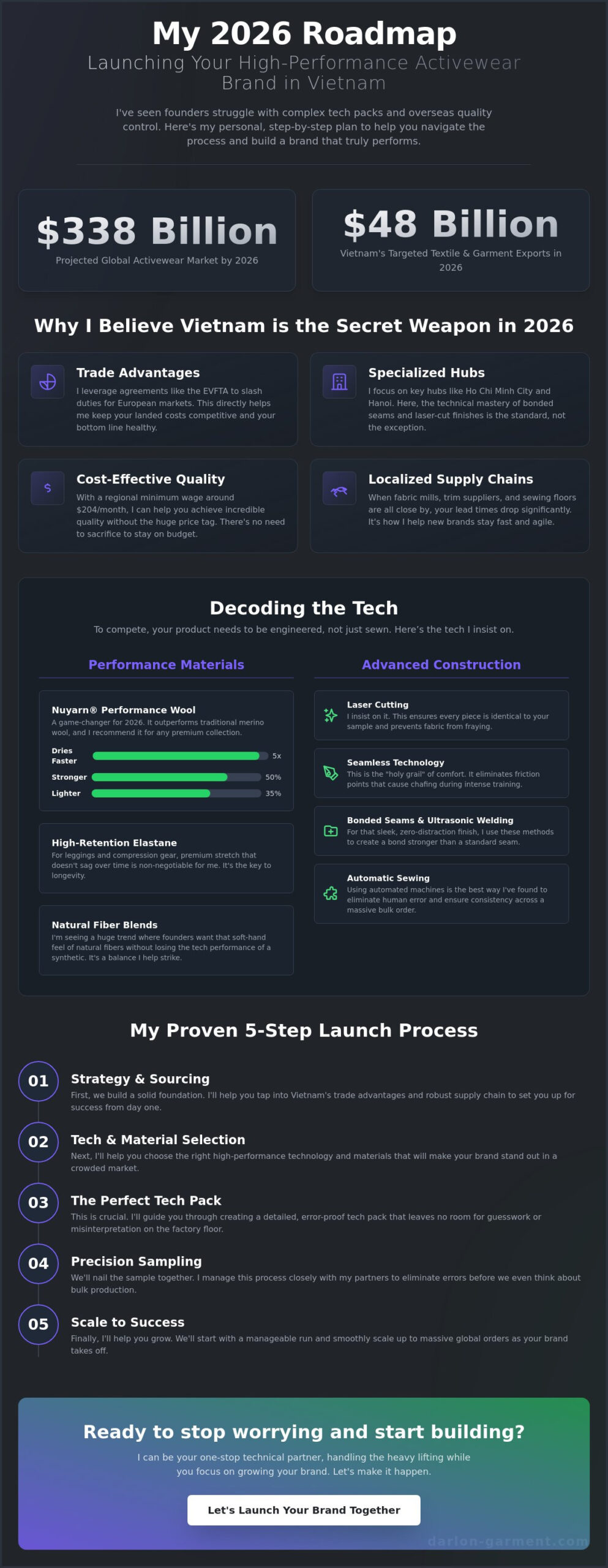
By the end of 2026, the global activewear market is projected to reach over $338 billion, yet many new founders will struggle to get a single sample right because they treat their factory like a vendor instead of a technical partner. I’ve seen how overwhelming it feels to stare at a complex tech pack or worry about quality control from across the ocean. If you’re wondering how to launch an activewear brand with a vietnam manufacturer without getting lost in jargon like OEM or ODM, you’re in the right place.
I know the fear of high MOQs and the stress of communication barriers can make the process feel impossible. That’s why I’m sharing my 2026 roadmap. I’ll show you exactly how to navigate the Vietnamese manufacturing landscape to launch a high-performance activewear brand that stands out in a crowded market. We’ll cover everything from sourcing Nuyarn performance wool to leveraging seamless and laser-cut technology to create a product that actually performs. This is your step-by-step plan to finding a one-stop solution that handles the heavy lifting while you focus on growth.
Key Takeaways
- I explain why Vietnam’s trade advantages and specialized garment hubs are essential for keeping your 2026 landed costs low.
- You’ll learn exactly how to launch an activewear brand with a vietnam manufacturer by utilizing high-performance tech like laser cutting and Nuyarn wool.
- I share my personal vetting checklist so you can verify a factory’s OEM capabilities and machinery before committing to a partnership.
- I break down my process for building a perfect Tech Pack and managing sampling to eliminate errors during bulk production.
- Discover how choosing a one-stop technical partner allows you to scale smoothly from small initial runs to massive global orders.
Why I Believe Vietnam is the Secret Weapon for Activewear Startups in 2026
I’ve watched the global manufacturing map shift dramatically over the last few years. By 2026, the migration of high-performance activewear production from China to Vietnam has reached a critical tipping point. It’s no longer just about seeking lower overhead; it’s about tapping into specialized industrial hubs that have mastered the technical nuances of stretch fabrics and compression gear. When I talk to founders about how to launch an activewear brand with a vietnam manufacturer, I emphasize that they aren’t just buying labor. They’re buying into an ecosystem designed for speed and precision.
The trade benefits alone are a massive differentiator for your bottom line. I closely follow the impact of agreements like the EVFTA, which provide a significant edge by reducing or eliminating duties for European markets. Vietnam’s economic growth has been strategically tied to these trade partnerships, making it much easier for me to help brands keep their landed costs competitive. In 2026, with Vietnam targeting nearly $48 billion in textile and garment exports, the infrastructure is more robust than ever, ensuring that your shipping timelines stay predictable even as global logistics fluctuate.
The Shift from Bulk to Precision
I’ve seen the industry evolve from basic t-shirt assembly to the production of complex, multi-panel compression gear that requires extreme accuracy. The “Made in Vietnam” tag has earned a premium reputation in the fitness world because the local workforce has adapted to the high standards of global athletic giants. I’ve noticed that the latest infrastructure investments mean we can move products through ports faster than we could just two years ago. This precision is why I focus on specialized hubs in Ho Chi Minh City and Hanoi, where the technical mastery of bonded seams and laser-cut finishes is now the standard rather than the exception.
The Economic Advantage for Your Brand
In my experience, the real win for a startup is finding the balance between cost and quality. As of January 2026, the regional minimum wage in Vietnam’s top industrial zones (Region 1) is approximately USD 204 per month. This allows for competitive pricing without the quality sacrifices often found in less developed manufacturing regions. I help brands navigate these regional nuances and take advantage of localized supply chains. When your fabric mills, trim suppliers, and sewing floors are all within a tight radius, your lead times drop significantly. This localized approach is exactly how I help new labels stay agile in a fast-moving market.
Decoding the Tech: What Your Manufacturer Needs to Offer for High-Performance Gear
If you want to know how to launch an activewear brand with a vietnam manufacturer that actually competes on a global stage, you have to look past the price per piece. In 2026, the market is saturated with basic gear. To stand out, your product needs to be engineered, not just sewn. I always tell my clients that the machinery on the factory floor is just as important as the design on the paper. If a factory is still relying solely on manual processes, they won’t be able to hit the precision levels required for modern compression wear or high-performance kits.
I’ve seen a massive shift toward Nuyarn performance wool recently. It’s a game-changer for 2026 collections because it’s lighter, dries faster, and is significantly stronger than traditional ring-spun wool. When you combine this material with seamless technology, you’re offering the “holy grail” of comfort. Seamless garments eliminate the friction points that cause chafing during high-intensity training. If your manufacturer isn’t talking about these technical specs, they aren’t the right partner for a high-performance brand. I also lean heavily toward bonded seams for premium lines. While traditional stitching has its place, bonding creates a sleek, zero-distraction finish that customers now expect from high-end labels.
The Power of Performance Materials
The longevity of your leggings or sports bras often comes down to your elastane fabric choices. I’ve found that high-quality stretch retention is non-negotiable for premium brands. While synthetics still lead the way in moisture-wicking and antimicrobial finishes, I’m seeing a significant trend where founders want natural fibers integrated into their blends. It adds a soft-hand feel that customers love without losing the technical performance of a synthetic. It’s a balance I help my partners strike every day.
Advanced Construction Techniques
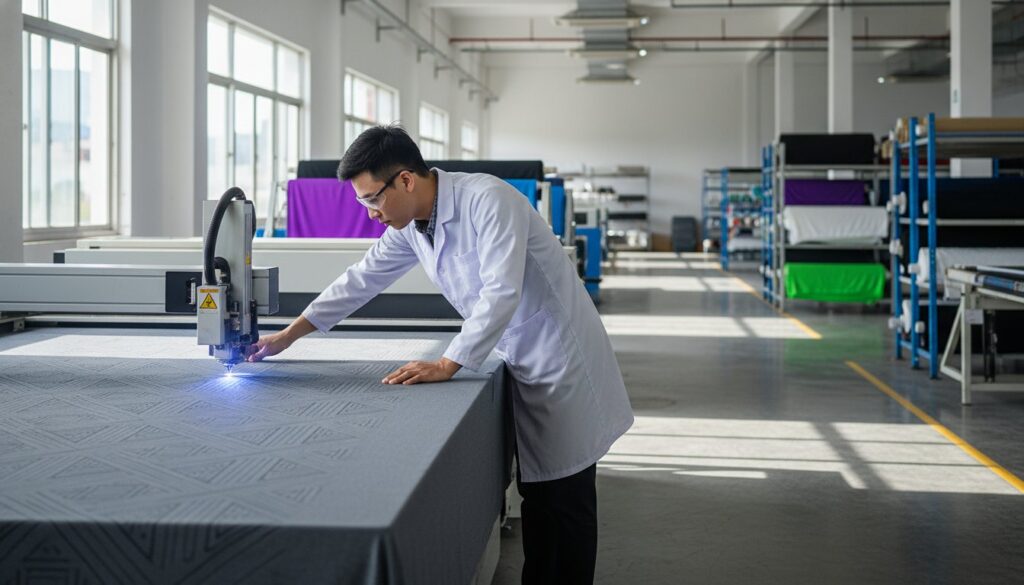
Precision is everything in this business. I insist on laser cutting for my production runs because it cauterizes the edges of the fabric. This prevents fraying and ensures every single piece in a bulk order is identical to your original sample. For items requiring high compression or waterproof features, I often recommend ultrasonic welding. This method uses high-frequency vibrations to join fabrics, creating a bond that’s stronger than a standard seam. To maintain this level of consistency, I use automatic sewing machines. It’s the best way to eliminate the human error that often plagues large-scale manufacturing. If you’re ready to see how these technologies look in practice, feel free to explore my latest performance apparel solutions.
Finding the Right Partner: My Checklist for Vetting Vietnam Garment Factories
I’ve spent years on factory floors across Southeast Asia, and I’ve learned that finding a reliable partner is the most critical step when you’re figuring out how to launch an activewear brand with a vietnam manufacturer. I don’t believe in leaving this to chance. My vetting process is methodical because a single mistake in the selection phase can derail your entire 2026 launch. I look for five specific markers of a professional operation before I ever sign a contract.
- Verify OEM/ODM capabilities: Can they actually develop your custom designs from scratch, or are they just garment assemblers? I check if they have a dedicated R&D team.
- Inspect the machinery: As I mentioned earlier, 2026 standards require laser cutting and automatic sewing. If they are using 20th-century tools, your high-performance gear will suffer.
- Audit certifications: I look for ISO, WRAP, or BSCI compliance. With the EU’s new EPR requirements for textiles, having a certified, transparent partner is no longer optional.
- Request a sample run: I never commit to bulk without seeing a physical prototype. This is where you see if their “high-performance” claims match the actual garment.
- Test technical communication: It’s not just about English. It’s about whether they understand technical jargon like GSM, four-way stretch, and moisture-wicking metrics.
The OEM vs. ODM Dilemma
Choosing a sportswear factory vietnam that offers in-house design support is a major advantage. If you have your own Tech Packs ready, a high-capacity OEM partner is your best bet. However, if you are still refining your vision, an ODM solution lets you build on their existing high-performance blocks. I’ve found that factories with in-house designers can save you months of back-and-forth by identifying construction issues before the first sample is even cut.
Red Flags to Watch Out For
I always tell founders to watch out for “middleman” agents who pose as factories. These trading companies don’t own a single sewing machine. They often outsource your work to lower-tier shops, which completely kills your quality control. If the pricing seems impossibly low, it’s a red flag. In the 2026 landscape, with rising regional minimum wages, “too good to be true” pricing usually translates to unwearable quality or unethical labor practices. I also check for the new Trade Union Law compliance to ensure the factory is up to date with the latest 2025 labor regulations. If they can’t provide clear documentation, I walk away.
From Tech Pack to Bulk Production: My Insider Process for a Smooth Launch
Once you’ve selected a partner, the transition from a concept to a physical product is where most founders feel the most pressure. I’ve found that the secret to a stress-free experience is a rigid, predictable workflow. If you want to know how to launch an activewear brand with a vietnam manufacturer successfully, you need to treat the pre-production phase with more respect than the actual sewing. Errors caught on paper cost nothing; errors caught in bulk production can sink a brand. I use a specific sequence to move from your initial ideas to a retail-ready collection.
I manage quality through a four-stage inspection process that begins long before the first stitch. First, we audit the raw materials for color fastness and stretch recovery. Next, we perform an initial production check on the first few units to verify setup. This is followed by in-line inspections during the mid-run and a final pre-shipment audit. This level of oversight is how I protect your brand’s reputation and ensure that every piece of high-performance gear meets the standards we set during sampling.
Mastering the Tech Pack
Everything I do on the factory floor depends on the quality of your spec sheet. Understanding how garments are made starts with a deep dive into the Tech Pack. I look for a complete Bill of Materials (BOM), precise grade rules for sizing, and construction callouts for things like flatlock stitching or bonded hems. A Tech Pack is the technical contract between your design vision and my production machinery. Without a detailed blueprint, even the best 2026-standard technology can’t produce a perfect result.
Navigating the Production Timeline
Managing the timeline requires a delicate balance between fabric lead times and sewing schedules. I typically recommend at least two rounds of prototyping. The first round focuses on fit and movement, while the second round uses the actual bulk fabric and trims. Your final milestone is the Pre-Production Sample (PPS). This is your last chance to approve the garment before I greenlight the bulk run. Once bulk is complete, I coordinate the logistics to move your gear from my facility to your warehouse, ensuring we meet your 2026 launch date. If you’re ready to see your designs come to life, contact me today to start your first sample run.
Scaling Your Brand: Why a One-Stop OEM Solution Like Mine Makes the Difference
I’ve seen many promising labels fail not because their designs were bad, but because their supply chain was a mess. When you’re learning how to launch an activewear brand with a vietnam manufacturer, it’s tempting to piece together different vendors for fabric sourcing, sewing, and finishing. I strongly advise against this fragmented approach. Dealing with multiple factories creates a “blame game” when quality issues arise. By keeping everything in-house, from the initial Nuyarn sourcing to the final laser-cut finishing, I provide a level of accountability that fragmented chains just can’t match.
Scaling is where this one-stop model really proves its worth. I’ve helped brands grow from their first 500-unit test run to massive orders of 50,000 pieces or more. In the 2026 landscape, you also have to think about global compliance. With the EU’s new Extended Producer Responsibility (EPR) requirements now in effect, producers are financially responsible for the entire lifecycle of their textiles. I help my partners navigate these sustainability hurdles by using traceable, eco-friendly materials and ensuring our labor practices meet the highest ethical standards. It’s about building a brand that’s as responsible as it is profitable.
Future-Proofing Your Activewear Line
I always tell my clients that choosing the right fitness wear manufacturer is a long-term marriage, not a quick transaction. My role is to keep you ahead of the curve by providing the latest fabric innovations and construction techniques before they hit the mainstream. Dar Lon Garment’s one-stop model eliminates the ‘middleman tax’ by managing every stage of production within our own physical infrastructure. This stability is crucial when you’re looking to maintain consistent quality across multiple seasons and product lines.
Let’s Get Your Brand Moving
If you’re ready to take the next step, I need a complete Tech Pack to give you an accurate quote. This blueprint allows me to calculate your material costs and production time with precision. I also handle the complexities of international shipping and customs documentation, so you don’t have to worry about your gear getting stuck at the border. Whether you’re focused on high-performance swimwear or seamless gym gear, I have the infrastructure to make it happen. Ready to launch? Send me your project details today and let’s start building your 2026 collection together.
Ready to Build Your 2026 Performance Collection?
Success in the activewear market requires a shift from basic assembly to technical engineering. I’ve shown you why Vietnam is the premier hub for this evolution, especially when you leverage advanced tools like laser-cutting and automatic sewing machines. By focusing on specialized materials like Nuyarn and seamless construction, you can create a product that stands out for its durability and precision. Knowing how to launch an activewear brand with a vietnam manufacturer is about more than just finding a factory; it’s about securing a technical backbone that can scale with you from 500 to 50,000 units.
Since 2019, I’ve provided a comprehensive one-stop OEM and ODM service designed to eliminate the common headaches of global sourcing. My team handles the complexities of tech packs, sampling, and bulk production so you can focus on building your brand’s presence. If you’re ready to turn your designs into high-performance reality, start your activewear production journey with Dar Lon Garment today. I look forward to seeing your brand move the world.
Frequently Asked Questions
What is the typical Minimum Order Quantity (MOQ) for activewear in Vietnam?
Typical MOQs for activewear in Vietnam range from 500 to 1,000 pieces per style or color. While larger industrial facilities prefer higher volumes, I’ve seen more factories adapting to the needs of startups by offering lower thresholds for specialized technical garments. These requirements often depend on the fabric’s minimum order from the mill. If you use a stock fabric, I can sometimes help you negotiate a lower entry point for your first collection.
How long does the entire production process take from design to delivery?
The entire production process usually takes between four to six months. This timeline includes one to two months for design and sampling, followed by another 60 to 90 days for bulk production once the Pre-Production Sample is approved. Factors like fabric availability and port congestion can influence the final delivery date. I always recommend starting your development at least half a year before your intended launch to account for any unforeseen logistics delays.
Can a Vietnam manufacturer help me source sustainable or recycled fabrics?
I can certainly help you source sustainable and recycled materials, as this has become a standard requirement for 2026 collections. Vietnam has a robust network of suppliers offering GRS-certified recycled polyester and organic cotton. When you’re learning how to launch an activewear brand with a vietnam manufacturer, checking for these certifications is vital. I assist my partners in verifying the traceability of these eco-friendly fabrics to ensure they meet international regulatory standards.
Do I need to visit the factory in person before starting production?
You don’t strictly need to visit the factory in person, though I find it builds stronger long-term trust. Many of my clients manage the entire process remotely through digital tech packs and physical sample shipments. With high-definition video calls and detailed inspection reports, you can verify machinery and production quality from your home office. However, if you’re planning a massive scale-up, a site visit allows you to see the operational scale firsthand.
What is the difference between CMT and FOB manufacturing models?
CMT stands for Cut, Make, and Trim, where you provide the fabric and I handle the assembly. FOB, or Free on Board, is a more comprehensive model where I source the materials, manage the production, and deliver the goods to the port. Most startups I work with prefer the FOB model because it simplifies the supply chain. It places the responsibility for material quality and logistics on the manufacturer, which reduces your operational risk.
How do I ensure the quality of my activewear is consistent across bulk orders?
I ensure quality consistency through a rigid four-stage inspection protocol. This starts with raw material testing and continues with an initial production check of the first few units. We then conduct mid-run inspections and a final pre-shipment audit to catch any defects before the goods leave the floor. Using automated machinery for sewing and laser cutting also minimizes the human error that can lead to inconsistencies in high-performance gear.
What are the typical shipping costs and times from Vietnam to the US or Europe?
Shipping from Vietnam to the US or Europe typically takes three to five weeks by sea freight. If you’re in a rush, air freight can deliver your goods in about five to seven days, though the cost is significantly higher. Costs vary based on volume and current carrier rates, so I always suggest getting a landed cost estimate early. I handle the export documentation to ensure your shipment moves through customs without unnecessary delays.
Can you handle custom branding elements like heat-transfer logos and tags?
I handle all custom branding elements, including heat-transfer logos, woven labels, and hang tags. These are essential for creating a professional look when you’re figuring out how to launch an activewear brand with a vietnam manufacturer. During the sampling phase, I’ll apply your branding to the prototypes so you can test the durability of the heat transfers after multiple washes. We integrate these steps directly into the production line to maintain efficiency and brand consistency.